
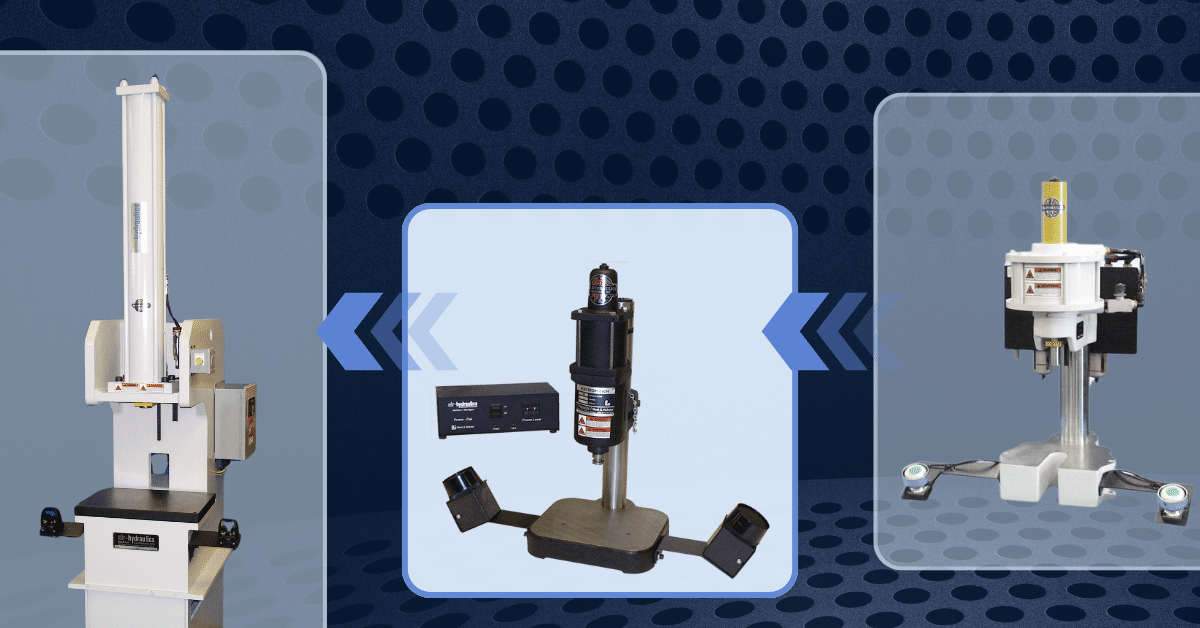
The right press can help maximize production, while the wrong press can create limitations. If your production line is slower than expected or simply not keeping up with demand, your press might be to blame. Many manufacturers continue to rely on presses that no longer align with their production goals, simply because it’s what they’ve always done. But how do you know when it’s time to upgrade or switch press types entirely? Below are seven common signs that your press may not be the right fit for your operation anymore.
7 Signs Your Production Press Isn’t Cutting it
If you know the signs, you can upgrade your press before it starts to cut into your production goals. Let’s take a look at the signs and what they mean.
1. Production Speed Can’t Keep Up
One of the most obvious signs that your press isn’t performing is sluggish production. If your output is consistently falling short of schedule, or if you’ve had to slow things down to prevent errors or malfunctions, it could be a sign that your press lacks the speed, automation, or cycle efficiency you need.
For high-volume manufacturing, even a small lag in press cycle time can result in significant delays over the course of a day or week. Upgrading to a faster-acting press or one that allows programmable motion, like a servo press, can dramatically improve throughput without sacrificing quality.
Do you have a press that isn’t cutting it?
Contact us to learn more about cutting-edge production presses
2. Inconsistent or Poor Product Quality
If your finished parts are coming out warped, uneven, or improperly assembled, your press might not be applying the right force or not applying it evenly. This is particularly common in older mechanical presses or in systems that rely on manual adjustments.
A press that’s too powerful for the application can damage materials, while one that’s too weak can leave processes incomplete. Switching to a press that allows more precise control, such as a servo electric, or a press that detects a non-conforming part, like a force and distance monitoring press, can help ensure consistent pressure, speed, and dwell time, which in turn improves part quality.
3. Wasting Time on Manual Adjustments
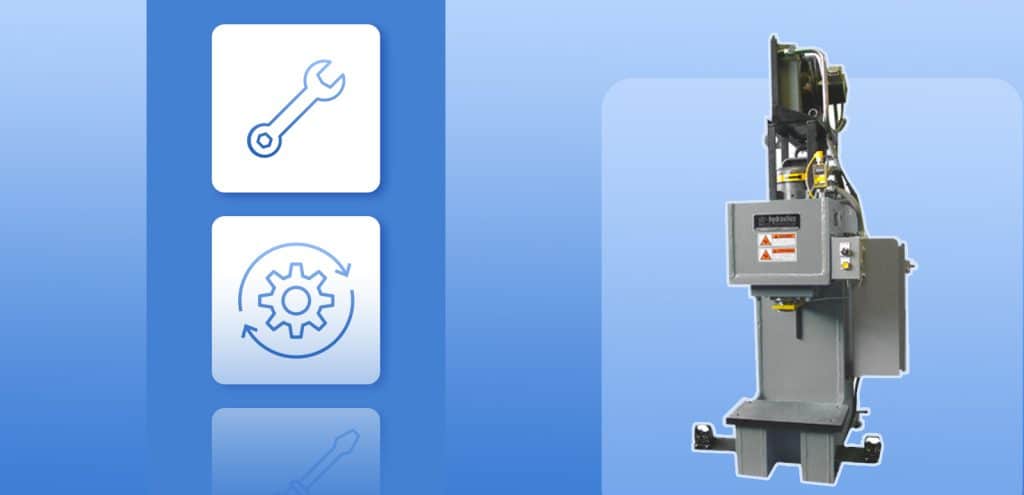
Constantly making small tweaks to pressure settings, stroke length, or part positioning isn’t just frustrating, it’s a sign your press lacks modern control systems or programmable automation. Older press models often require frequent manual intervention, which not only slows production, but also increases the risk of operator error.
Newer presses, especially servo or SCADA-integrated systems, offer better programmability and repeatability. If you’re spending more time setting up your press than actually running parts, it may be time to consider an upgrade.
4. Breakdowns
Unexpected downtime can kill a production schedule. If your press frequently breaks down, overheats, leaks hydraulic fluid, or throws error codes, it’s likely past its prime, or simply not built to handle your current workload.
In some cases, manufacturers overwork presses that aren’t designed for high-duty cycles, leading to premature wear. In others, the machine may be under-maintained or lacking modern diagnostic tools. Investing in a newer, more durable press can prevent breakdowns and offer features like remote monitoring and predictive maintenance.
5. High Energy Costs

Not all presses consume energy equally. Hydraulic presses, for example, tend to use more power than servo electric presses, especially when idle. If you’ve noticed rising utility costs or you’re being asked to meet new energy efficiency goals, it may be worth examining how much power your press is drawing.
Many manufacturers switch to servo, pneumatic, or air-over-oil presses to reduce long-term operational costs while maintaining production output. If your energy consumption is outpacing your revenue, your press might be a key culprit.
6. New Requirements
Many production environments evolve over time. New materials, tighter tolerances, faster delivery demands, or stricter quality control measures may have changed the way your operation functions. But if your press is the same one you’ve used for the past 10 or 15 years, it might not be able to meet your new requirements.
A press that worked fine for low-volume aluminum parts might not handle high-strength steel at scale. If your product mix has changed, it’s important to reassess whether your current press is still the right tool for the job.
7. Can’t Integrate With New Technology
Smart manufacturing and Industry 4.0 are no longer futuristic—they’re here. If your press can’t communicate with your other equipment, can’t be monitored remotely, or can’t integrate with a SCADA or MES system, you’re missing out on efficiency gains and valuable production data.
Modern servo and electric presses are built with connectivity in mind, offering plug-and-play compatibility with factory automation and data analytics platforms. If you’re still using a standalone press that operates in isolation, you’re likely falling behind competitors who are leveraging smarter systems.
Is Your Press Meeting Production?
Choosing the right press for your operation isn’t just about tonnage or stroke length, it’s about finding a system that aligns with your goals, your products, and the future of your production line. If you’ve experienced any of the issues outlined above, it may be time to reevaluate your press technology. Contact us to learn more about press upgrades and new presses to meet your goals.