
There are many different types of presses available in manufacturing and assembly. Choosing the right press can make the difference between a process that is efficient and effective, and one that isn’t. Let’s take a closer look at three of the most common types of presses in industrial applications: hydraulic vs. pneumatic vs. air-over-oil vs. servo presses.
How Each Press Type Works
Understanding how each type of press works is the first step to finding the right press for your needs. Let’s compare hydraulic vs. pneumatic vs. servo presses by each of their functions.
Hydraulic Presses
Hydraulic presses operate by using a hydraulic pump to move hydraulic fluid through valves into a cylinder, creating pressure that drives a ram downward with considerable force. Hydraulic systems are capable of generating extremely high force with smooth, consistent motion. Flow control valves and pressure relief systems help manage the speed and intensity of the stroke. These presses are especially well-suited for forming, stamping, or pressing operations that require sustained force over time.
Pneumatic Presses
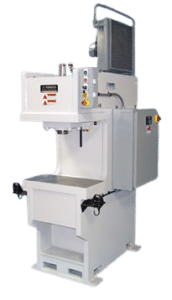
Pneumatic presses use compressed air to move a piston or ram within a cylinder. These presses tend to deliver less consistent force and are generally limited in the amount of pressure they can generate compared to hydraulics. However, they are much faster and simpler to operate, making them a go-to option for lighter-duty applications where speed is more important than high force or precise control.
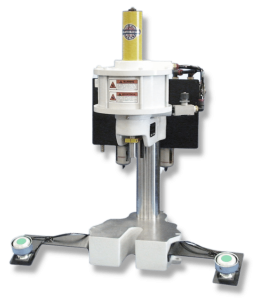
Hydropneumatic presses, or air-over-oil presses, combine compressed air with a hydraulic booster to deliver hydraulic-level force using standard shop air. This hybrid design provides the power and precise control of hydraulic presses while maintaining the high operating speeds, energy efficiency, and simple operation of pneumatic systems.
Servo Presses
Servo electric presses rely on a servo motor connected to a ball screw or roller screw drive to produce linear motion. The motor’s rotary motion is converted into straight-line force to drive the ram with high precision. Servo systems offer closed-loop control, meaning every aspect of motion, including position, speed, force, and dwell time, is electronically monitored and programmable. These presses do not rely on fluids or air, making them clean, energy-efficient, and extremely flexible.
Hydraulic vs. Pneumatic vs. Servo Presses
Different presses have different advantages and disadvantages. Let’s compare hydraulic vs. pneumatic vs. servo presses based on a few key features that manufacturers tend to look for and need for their processes.
Precision and Control
Servo presses stand out in terms of precision and programmability. Because they are driven by servo motors with real-time feedback, they allow users to create complex force-displacement curves, slow down at specific points, or adapt behavior based on sensor input. This level of control is difficult to match with hydraulic or pneumatic systems, which rely more on mechanical and fluid dynamics.
Hydraulic presses offer relatively good control over force and speed, but lack the precision of servo presses. Although some modern hydraulic systems incorporate proportional valves and digital controllers to improve response, there is still a delay in how fluid systems react to changes. Pneumatic presses provide the least control, particularly over force and end-position accuracy, since air pressure fluctuates with supply and environmental conditions.
Hydropneumatic (air-over-oil) presses bridge the gap by utilizing hydraulics for the actual power stroke, yielding better speed and force consistency than pure pneumatic systems while remaining simpler than full hydraulic setups.
Speed and Cycle Time
Pneumatic presses are generally the fastest of the three, capable of extremely short cycle times due to the rapid movement of compressed air and low mass components. They are ideal for high-speed operations such as small-part assembly or packaging.
Servo presses offer fast response and consistent cycle times as well, although slightly slower than pneumatics in pure speed. However, their ability to slow or pause during a cycle—for quality checks or precise positioning, for example—makes them highly efficient in controlled environments.
Hydraulic presses tend to be slower, especially in applications that require a dwell at the bottom of the stroke or slower forming speeds to prevent material damage. Warm-up periods, pressure build-up, and cooling time can all add to longer cycle times.
Hydropneumatic presses, like our AH-Series Press, deliver impressive cycle times at nearly pneumatic speeds during their approach stroke, only engaging hydraulic power during the final pressing operation to maintain high throughput. Models like our C-Series Air-Hydraulic Press cycle more similarly to a full hydraulic press, applying controlled pressure throughout the entire stroke.
Force Capability and Consistency
Hydraulic presses excel in high-force applications. They can generate massive loads, with some enormous hydraulic presses generating 80,000 tons of force, with ease and consistency. This makes them ideal for metal forming, deep drawing, and compression molding.
Pneumatic presses are limited by air pressure and cylinder size, making them better suited for low- to moderate-force applications (typically under 10 tons). Force consistency is also a challenge with pneumatic systems due to the reliability of a compressed air supply.
Servo electric presses offer excellent force control and can produce forces suitable for many mid-range applications. While not typically used for the heaviest-duty forming tasks, servo presses offer highly repeatable force and position control within their rated capacity, and the highest level of force output is generally not necessary for most applications.
Hydropneumatic systems efficiently multiply air pressure to achieve up to medium-range hydraulic forces (often up to 50 tons) with consistent performance, filling the gap between light-duty pneumatic and high-tonnage hydraulic presses.
Maintenance and Cleanliness
Hydraulic presses require careful and detailed maintenance, including fluid changes, leak inspections, and filter replacements. Over time, seals degrade, hoses wear, and pumps need servicing. Additionally, leaks can contaminate workspaces and products, which is unacceptable in cleanroom or electronics manufacturing environments and can pose safety risks in any manufacturing operation.
Pneumatic presses have fewer moving parts and no oil-based systems, which reduces the frequency of maintenance. However, they do require dry, clean air and periodic valve or seal replacements to prevent wear or sticking.
Servo electric presses are the cleanest and most maintenance-friendly of the three. With no hydraulic fluid or compressed air system, maintenance is primarily mechanical; it’s focused on lubrication of bearings, motor components, and screw drives. The lack of fluid systems also makes them ideal for sterile or environmentally controlled production lines. One potential drawback of servo electric presses is the complexity of actuator repairs. Unlike conventional mechanical systems, actuator servicing often requires specialized knowledge and equipment, which may necessitate returning the unit to the manufacturer for evaluation and repair by a qualified technician.
Hydropneumatic presses feature a self-contained fluid power leveraging system operated by air, eliminating external hydraulic power units and hoses. This substantially lowers maintenance needs and minimizes leak risks compared to full hydraulic systems.
Energy Efficiency
Energy consumption is a growing concern in manufacturing. Hydraulic presses tend to be the least efficient of the three. Their pumps often run continuously to maintain pressure, consuming energy even when the press is idle. Excess heat is another energy waste factor, often requiring cooling systems.
Pneumatic presses are moderately efficient and win substantially compared to hydraulic systems, but they still waste energy compressing air and venting it during each cycle. Leaks in the air system can also reduce overall efficiency.
Hydropneumatic presses are exceptionally energy-efficient because they operate off standard shop air and only consume compressed air during active stroke movement, avoiding continuous power draw when idle.
Servo electric presses are generally the most energy-efficient option. They only consume power when in motion, and operators can program their motor systems to shut down between cycles. This not only saves energy but also reduces thermal buildup, making for more sustainable and cost-effective operation.
Cost and Investment Considerations
When it comes to upfront cost, pneumatic presses are usually the most affordable. They’re simple to install, easy to operate, and require minimal infrastructure. However, their limited capabilities may necessitate more manual quality checks or rework, which can increase long-term costs.
Hydraulic presses have a mid-range initial investment but can become costly to operate and maintain over time. The need for hydraulic infrastructure (power units, fluid reservoirs, hoses, etc.) and the frequency of maintenance can lead to higher total cost of ownership.
Servo electric presses have the highest initial cost due to advanced components and control systems. However, their low energy use, minimal maintenance, and increased productivity often lead to significant savings over the life of the equipment. Additionally, their programmability and flexibility make them ideal for use in lean or agile manufacturing environments where equipment must adapt to changing production needs.
Hydropneumatic presses offer an attractive middle ground for cost, requiring significantly less capital investment and infrastructure than hydraulic or servo presses while providing superior power and lower operating costs than basic pneumatic setups. Even with the addition of data monitoring systems, these presses require a much lower upfront investment than similar servo electric options.
Ideal Use Cases for Each Press Type
Each type of press has its own ideal niche, depending on the application, production volume, and required quality standards.
Hydraulic presses are best suited for:
- Heavy-duty forming and metalworking
- Deep drawing and high-tonnage stamping
- Applications requiring sustained pressure or slow deformation
Pneumatic presses are ideal for:
- High-speed, lighter-force applications
- Simple assembly operations
- Cost-sensitive environments with limited control requirements
Servo electric presses excel in:
- Precision assembly and forming
- Cleanroom or contamination-sensitive applications
- Data-driven manufacturing environments
- Low-to-medium force applications requiring traceability and adaptive control
What Press is Best?
There is no one-size-fits-all solution when it comes to press systems. Understanding the trade-offs between hydraulic vs. pneumatic vs. servo presses allows engineers and operations managers to align press selection with their production goals.
Hydropneumatic, or air-over-oil, presses offer a versatile solution for applications operating in the medium-force range. Positioned between conventional hydraulic and pneumatic systems, these presses deliver superior force and consistency without requiring the substantial capital expenditure of servo-electric alternatives. When equipped with digital monitoring equipment, like our SIG-series air-over-oil models, they provide an accessible entry point into modern, data-driven manufacturing processes.
With production needs evolving quickly, it’s helpful to have a press that will grow and evolve with you, according to your goals and meet your production needs without excess of force, features or investment costs. To learn more about any type of press, contact us today. We’ll give you more details on each one, and help you find the right model for your needs.