

Rotary index tables are versatile tools that allow for precise positioning and rotation of workpieces. These are essential for various operations in manufacturing and assembly as well as other applications such as milling, drilling, and inspection. With a range of options available in the market, choosing the best rotary index table involves careful consideration of several key factors. Let’s take a look at how to select the right rotary index table for your needs.
How to Select the Right Rotary Index Table
There are many different types of rotary index tables available, and finding the right one can be a challenge. It’s helpful to first assess a few particular aspects of your process. Then, you can hone in on the right aspects of the rotary index table.
Assessing Your Task
To select the right rotary index table, it’s important to first assess the needs and parameters of your task.
- Weight: Manufacturers should assess the weight of their typical workpieces and any fixtures or additional equipment that might be used in conjunction with the rotary table.
- Repeatability: The repeatability needed for the operation will determine the level of accuracy required for your rotary index table.
- Environment: Consider the surrounding environment, including the dust and debris your table might be exposed to. If operating within an explosion-proof environment where electricity is restricted, an air-powered positioning table may be required. It’s also important to consider the surrounding equipment the table must integrate with to select the most compatible option.
- Operations: Evaluating the types of operations you typically perform will help determine the level of flexibility you’ll need for your rotary index table.
- Budget: Consider what budget makes sense for your rotary index table, and how the machine could provide ROI.
Pneumatically-Driven Rotary Index Tables Are Rugged and Highly Accurate
Learn more >>
Load Capacity
One of the foremost considerations when selecting a rotary index table is load capacity. Load capacity refers to the maximum weight the table can support without compromising its functionality or accuracy.
Overloading a rotary table can lead to premature wear and tear, reduced precision, and potential damage to both the table and the workpiece. Choosing a table with a load capacity that comfortably exceeds these requirements ensures reliable performance and longevity.
Air-Hydraulics Pneumatic Rotary Index Tables come in models with a maximum load capacity up to 600 lb. View our rugged, low profile indexing tables today>
Accuracy
Another critical factor to find the right rotary index table is the indexing accuracy. Indexing accuracy is the table’s ability to rotate and stop at precise, predetermined positions. This accuracy is critical for applications where even slight deviations can lead to significant errors in the final product.
Durability
Durability and build quality are also important aspects to consider. Rotary index tables are significant investments, and their durability directly impacts their return on investment. Tables constructed from high-quality materials are more likely to withstand the rigors of daily use in industrial environments.
Additionally, features such as sealed bearings and robust locking mechanisms contribute to the overall durability of the table. Manufacturers should look for tables with a reputation for reliability and minimal maintenance requirements, ensuring that they can withstand the demands of the process and manufacturing environment.
Surrounding Equipment
Compatibility with existing equipment is another important consideration. The rotary index table should integrate seamlessly with your current machinery and control systems. This includes assessing the mounting options, table size, and interface compatibility. Proper integration minimizes setup times and maximizes the efficiency of your application processes.
Range of Motion
The range of motion and flexibility of the rotary table is another factor to consider. Some rotary tables offer continuous 360-degree rotation, while others may be limited to specific angular increments.
The ability to mount the table vertically or on an angle adds another dimension, enabling more flexibility for the intended indexing operation.
Easy Use
Ease of use and operator training shouldn’t be overlooked. A rotary index table that is easy to set up, program, and operate can significantly enhance productivity and reduce the learning curve for operators.
Tables with intuitive control interfaces, clear instructions, and accessible maintenance features are preferable. Investing in operator training can also ensure that your team can effectively utilize the rotary table to its full potential. Manufacturers should also consider the availability of customer support and training resources provided by the table’s manufacturer.
Budget
Lastly, cost considerations play a significant role in the selection process. While it might be tempting to opt for the least expensive option, it is important to balance cost with the features and quality required for your applications. Higher initial investments in a quality rotary index table can lead to greater long-term savings through improved efficiency, reduced downtime, and lower maintenance costs. Manufacturers should perform a cost-benefit analysis to determine the total cost of ownership and ensure that the chosen table offers the best value for their specific needs.
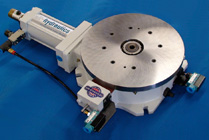
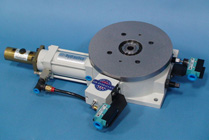
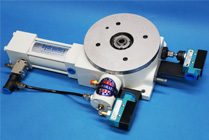
Selecting the right rotary index table requires carefully considering several factors. A well-chosen rotary index table is an investment in precision, efficiency, and long-term success in the competitive landscape of modern manufacturing. To learn more about highly accurate, durable, pneumatically-driven rotary index tables, contact us today.