
Hydraulic presses are powerful tools that are essential to many industries. These are also some of the most powerful manufacturing machines available, and they must be guarded properly for their intended applications. Ensuring that your press meets safety standards is critical to protecting your workers, your equipment, and producing high-quality products. Let’s take a look at the best hydraulic press guarding options, OSHA’s guidelines, and some tips to keep your press safe and working smoothly.
Guarding Guidelines for Hydraulic Presses
Guarding helps to protect operators and surrounding employees from hazards like pinch points, moving parts, and flying debris. Today, two-hand non-tie down controls are often required for hydraulic presses to ensure the operator’s hands are clear of the working area during press operation. If your press is not equipped with two-hand controls, guarding will likely be required by OSHA for worker safety. For certain applications, guarding is required in addition to two-hand controls. These guards should be durable, securely attached to the press, and capable of preventing access to the working area during operation.
Types of Guarding for Hydraulic Presses
When it comes to selecting the best hydraulic press guarding options, there are several different types to consider. Each has its own benefits depending on your specific application:
Light Curtains
Also called presence sensing devices, light curtains sense the presence of anything entering the working area via an obstruction to beams of light. When the path of light between the two sensors is broken, these devices will halt or return the press cycle, as programmed.
- Advantages: These devices are easy to place, and since they use light beams instead of solid guarding, they can be an effective guarding option for areas that are difficult to maneuver around.
- Disadvantages: Since they are not physical barriers, light curtains might not provide enough protection from debris. This may require additional guarding.
Fixed Guards
 These are physical barriers that prevent access to the press’s moving parts. They are typically bolted or welded in place.
- Advantages: These guards are simple, durable, and effective at preventing access to hazardous areas.
- Disadvantages: Fixed guards may limit operator visibility and can make maintenance, tooling changes and loading of workpieces more difficult.
Guarding with Interlocking Doors / Interlocking Guards
These guards are connected to the press’s control system and automatically shut down the machine if the guard is opened or removed.
- Advantages: Interlocked guards can automatically shut down the press when opened, offering a high level of safety.
- Disadvantages: These systems can require complex installation and higher upfront cost due to integration with the press’s control system.
Adjustable Guards
These can be moved or adjusted to accommodate different sizes of materials while still providing protection.
- Advantages: Adjustable guards are flexible and can be adapted for different materials or tasks.
- Disadvantages: The adjustable nature of the guard may require frequent adjustments and offer less security if not properly set.
Press guarding isn’t just important for hydraulic presses.
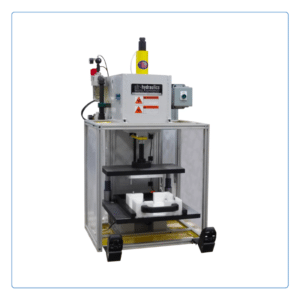
At AHI, all of our pneumatic, hydropneumatic air-over-oil and hydraulic presses can be equipped with a variety of flexible, customizable guards, light curtains and other safety devices.
Tips to Keep Your Hydraulic Press Safe and Functional
Maintaining the safety and functionality of your hydraulic press is a continuous process. Here are some tips to ensure that your press remains in peak condition:
- Regular Inspections: Perform regular safety inspections to check for wear, misalignment, or damage to guards and other safety features.
- Preventive Maintenance: Routine maintenance is key to keeping your press functioning safely. Make sure all moving parts are well-lubricated and that hydraulic fluid levels are monitored.
- Operator Training: Ensure that all operators are trained not only to use the press but also to understand the function and importance of the guarding system.
- Emergency Stop Systems: Regularly test the emergency stop buttons and other safety controls to ensure they are functioning correctly. Emergency stop buttons should be easily accessible, and presses should be equipped with lockout/tagout systems to prevent accidental operation during maintenance.
- Compliance Checks: Periodically review your hydraulic press setup against OSHA standards to ensure compliance and avoid potential fines or workplace injuries.
By understanding OSHA requirements, selecting the right guarding system, and keeping up with safety and maintenance, you’ll ensure that your hydraulic press remains safe and fully functional. Whether you opt for fixed, interlocking, or adjustable guards, or light curtains, choosing the best hydraulic press guarding options for your operation is essential to maintaining a safe working environment.
