
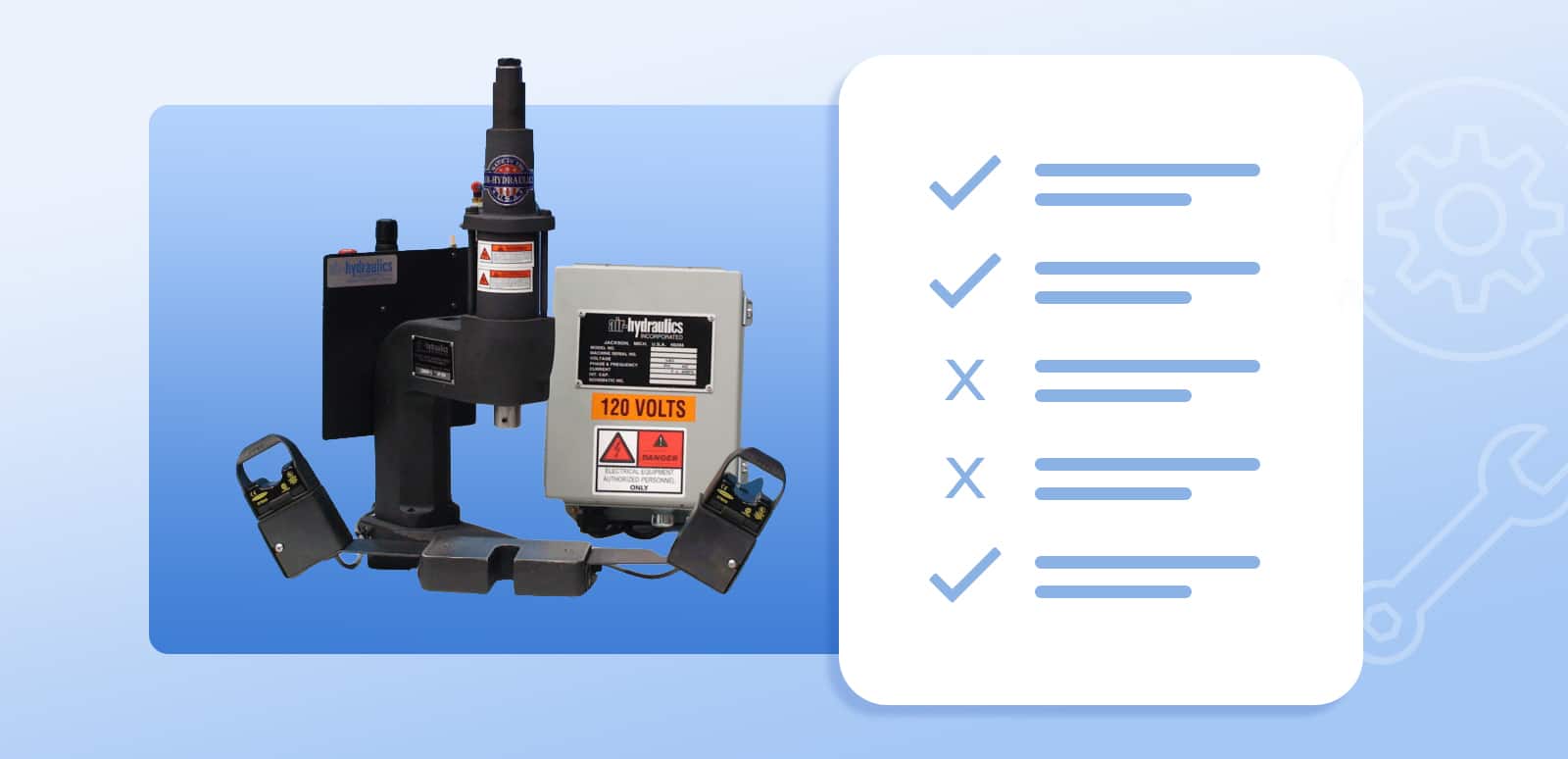
Maintaining your air press is essential for ensuring its longevity, efficiency, and safety. Regular maintenance helps prevent unexpected breakdowns, reduces overall downtime, and saves on costly repairs. In this guide, let’s take a look at the important steps involved in air press maintenance.
The Complete Guide to Air Press Maintenance
There are many advantages to air presses. Compared to hydraulic presses, air presses often are less expensive to purchase, easier to maintain, have smaller footprints, and more. Performing regular maintenance will help you take advantage of these advantages, and keep your press in top working order.
Interested in a new air press?

Learn more about AHI air presses and technologies ›
Lock-Out, Tag-Out
Before beginning any maintenance, it’s critical to follow lock-out, tag-out (LOTO) procedures. LOTO procedures require disconnecting and locking the power source to prevent accidental startup during maintenance. Tagging the machine with a visible warning ensures everyone knows the equipment is being serviced. Adhering to LOTO procedures protects you and your colleagues from serious injury.
Drain Water From Air Supply
All air contains some amount of water vapor. This water vapor will condense into liquid water in the compressed air system when the air cools past the saturation point. Moisture in the air supply can cause significant damage to the air press. Regularly draining the water from the air compressor and air lines prevents rust, corrosion, and operational issues. This step is especially important in humid environments where moisture buildup is more common. Ensure all water traps are emptied and check for any signs of excessive moisture in the system.
Change Air Filter
The air filter is an especially important element in air press maintenance. It prevents dust, debris, and other contaminants from entering the air press. Over time, the filter can become clogged, reducing airflow and efficiency. Replacing the air filter at regular intervals ensures clean air supply, optimal performance, and prevents damage to internal components. Usually, air filters should be replaced about every 6 to 12 months, though this might be more frequent in especially dirty environments. Always use the manufacturer-recommended filter for best results.
Lubrication (If required)
If your air press requires lubrication, proper lubrication is vital for reducing friction and wear on moving parts. Regularly check and refill lubricants according to the manufacturer’s specifications. Keep in mind that different components may require different types and levels of lubricants, so make sure that you’re using the correct type of lubricant for each part. Proper lubrication extends the life of your air press and maintains smooth operation.
Replace Seals and Wear Parts
Seals and other wear parts degrade over time, leading to leaks and inefficiencies. The US Department of Energy states that air leaks around seals or other wear parts can waste as much as 20 to 30% of the air compressor’s output. Regularly inspect these components and replace them as needed to maintain the air press’s integrity. Keeping a stock of commonly used seals and wear parts can minimize downtime and ensure quick repairs when necessary. This will not only help the press maintain its smooth functionality, but it will also help the press operate with great efficiency.
Have an AHI Air Press? Contact us for information on recommended filters or replacement seals and other wear parts for our A-Series or AP-Series Air Presses.
Inspect Tubing
Tubing in the air press system can also develop cracks, leaks, or other damage over time. Regularly inspect all tubing for signs of wear and tear. Replace any damaged sections promptly to prevent air leaks and maintain system pressure. Properly functioning tubing is essential for the efficient operation of the air press.
Check and Adjust System Pressure
Operating your air press at the correct pressure is important for both performance and safety. Regularly check and adjust the system pressure according to the manufacturer’s specifications. If the system pressure is too high or too low, it can cause damage and reduce efficiency or cause non-conforming assemblies. Ensure the pressure settings are appropriate and correct for the tasks at hand. If the system pressure or force is not correct, consider checking or replacing the seals in the cylinder.
Safety Mechanisms
Safety mechanisms, such as pressure check valves and emergency stop buttons, must be in good working condition. Regularly test these mechanisms to ensure they function correctly in case of an emergency. It’s also important to examine additional safety mechanisms, such as light curtains, and make sure they’re in full working order. Properly working safety mechanisms protect operators and prevent equipment damage.
Clean Working Area
A clean working area is essential for safe and efficient maintenance. Keep the area around the air press free of debris, oil spills, and other hazards. A tidy workspace reduces the risk of accidents and makes it easier to use the press and perform air press maintenance tasks effectively.
Cycle Testing
After performing maintenance, it’s important to run cycle tests to ensure everything is functioning correctly. Cycle testing involves operating the air press through a complete cycle to check for any issues. This step helps identify problems before they become serious and ensures the air press is ready for use.
Air-Hydraulics offers two lines and six models of industrial air presses for a variety of manufacturing and assembly applications. View Air Press Options ›
Regular maintenance of your air press is essential for ensuring its longevity and optimal performance. By following this complete guide to air press maintenance, you can keep your equipment in top condition, reduce the risk of unexpected breakdowns, and maintain a safe working environment. If your air press isn’t working like it used to, or you want to upgrade your press, we can help. Contact us today to learn more about air press or air-over-oil press options.