
When it comes to light- to mid-duty assembly processes, 2-ton presses are one of the most popular options in modern manufacturing. But not all 2-ton presses are created equal. From force generation to ideal applications to maintenance needs and more, different types of presses offer unique advantages and drawbacks. This 2-ton press comparison will help you evaluate your options and choose the right solution for your application, whether you’re focused on precision, budget, floor space, or ease of automation.
Why Choose a 2-Ton Press?
First of all, why choose a 2-ton press at all? Why not a press with more force, or less? Of course, this type of press isn’t right for all assembly tasks, but it provides enough force for a wide range of small-to-medium assembly tasks, without requiring extra infrastructure or energy that many larger industrial presses do. These presses are commonly used in industries like automotive, electronics, and appliance manufacturing, as well as many general assembly operations. Typical tasks might include bearing insertion, bushing installation, riveting, crimping, staking, and light-duty forming operations.
While 2 tons of force may sound modest compared to heavier industrial machinery, it’s more than enough for many applications. The key is choosing the right type of 2-ton press to meet your specific production needs.
Types of 2-Ton Presses: Pros and Cons

Now, let’s move on to some of the most common types of 2-ton presses. This includes manual presses, which amplifies force mechanically through a series of gears activated by manual operator input, pneumatic presses, which use compressed air, hydraulic presses, which use hydraulic fluid, hydropneumatic presses, which use a combination of compressed air and hydraulics, and servo electric, which is powered by electricity.
Here’s a 2-ton press comparison of the pros and cons of each different type of press.
Manual (Arbor or Toggle) Presses
Best for: Low-volume production, hand-assembled work, prototyping
Manual presses, also called arbor presses or toggle presses, rely on operator force and mechanical leverage to generate pressing power. They’re often seen in small assembly cells or repair stations. While they lack automation and control features, they remain a good choice for basic, low-cost operations.
- Maintenance: Minimal, typically limited to occasional cleaning or lubrication
- Cost: low
- Pros:
- Affordable and cost-effective
- No electrical or pneumatic hookups required
- Simple to operate and easy to maintain
- Compact and portable for benchtop use
- Cons:
- Limited to low-volume production
- Operator fatigue
- Inconsistency: force is controlled by the operator
Pneumatic (Air) Presses
 Best for: Repetitive pressing with moderate control and speed
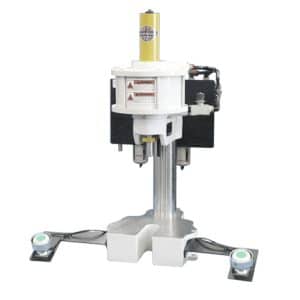
Pneumatic presses use compressed air to generate force. They’re fast, reliable, and affordable, making them a great middle-ground between manual and high-end hydraulic systems. Since they require a compressed air system, they’re often found in facilities with existing pneumatic infrastructure.
- Maintenance: Regular air filter replacements, valve replacement, and lubrication (certain models)
- Cost: moderate
- Pros:
- Quick cycle times with minimal operator effort
- Easy to install and use
- Compact design and low energy consumption
- Ideal for moderate-volume automated setups
- Cons:
- Less force control than hydropneumatic or hydraulic presses
- Compressed air systems require ongoing maintenance
- Not suitable for high-precision or high-force applications
- Can cause abrupt pressing (snapping) action when due to air buildup when undersized
Hydraulic Presses
 Best for: Jobs needing higher dwell time or consistent force through the stroke
Hydraulic presses use fluid pressure to exert force. Their strong, consistent pressing action makes them ideal for more demanding or material-intensive applications. However, they do come with larger footprints and higher maintenance needs, like checking and replacing seals and hoses, maintaining the hydraulic fluid, maintaining lubrication and cooling systems, and more. They also have higher safety risks than other similar press types, due to their high-voltage energy use and high potential for oil leaks.
- Maintenance: Fluid checks, seal replacements, hose inspections, lubrication, cooling systems
- Cost: High
- Pros:
- High pressing force throughout the stroke
- Suitable for forming, punching, and bushing and more
- Durable under heavy loads and prolonged use
- Cons:
- Slower operation than pneumatic or hydropneumatic presses
- Requires hydraulic fluid and regular maintenance
- More complex and bulkier than other options
- Requires high voltage energy, which is used to constantly run the machine while powered on
Hydropneumatic Presses
 Best for: Precision pressing with force consistency, lower energy usage, and minimal maintenance
Hydropneumatic presses, also called air-over-oil presses, combine the force of hydraulics with the efficiency of pneumatics. They use air to position the cylinder quickly and apply hydraulic force at the end of the stroke. This hybrid approach delivers consistent power without the complexity and maintenance of a full hydraulic system. Many manufacturers prefer hydropneumatic presses for automated lines where clean operation, speed, and control are priorities.
- Maintenance: Occasional seal checks, fluid top-offs, and air system inspections
- Cost: Moderate
- Pros:
- Combines precision and high force at low energy cost
- Requires minimal hydraulic fluid, with no need for a bulky reservoir
- Faster and cleaner than full hydraulic presses
- Requires less maintenance than traditional hydraulic systems
- Over 1 million cycles under normal usage before maintenance is required
- Ideal for medium-to-high-volume assembly operations
- Easy to integrate into automated processes
- Smooth and consistent fluid-powered pressing action
- Cons:
- Higher initial cost than pneumatic presses
- Requires compressed air supply
- Not as simple to maintain as manual presses
Servo Electric Presses
Best for: High-precision pressing with excellent force and position control, energy efficiency, and low maintenance
Servo electric presses use a servo motor and ball screw or roller screw mechanism to deliver highly accurate motion and force control. Unlike hydraulic or air-over-oil systems, they don’t require fluid power—eliminating leaks, contamination risks, and many traditional maintenance concerns. These presses are ideal for applications where traceability, repeatability, and a clean working environment are critical, especially in automated or high-tech manufacturing environments.
- Maintenance: Occasional lubrication, system diagnostics — typically no fluids or filters to manage. Servo electric presses must be sent back to the factory for evaluation and will require a certified technician and/or the manufacturer to complete all repairs – these presses cannot be field serviced for larger repairs.
- Cost: Higher initial investment, but lower total cost of ownership over time
- Pros:
- Provides precise, programmable control over force, position, and speed
- Extremely clean—no hydraulic fluid or compressed air required
- Energy-efficient—only consumes power during the pressing cycle
- Generates real-time data for quality control and process traceability
- Minimal maintenance with fewer moving parts
- Life expectancy up to 5 million cycles under normal usage
- Easy to integrate into Industry 4.0 or data-driven assembly lines
- Cons:
- Higher upfront cost than pneumatic or hydropneumatic systems
- Requires electronic control systems and trained operators for setup
Comparing Space and Integration Requirements
Each type of 2-ton press has its own space and setup considerations. Manual and pneumatic presses are compact and suitable for workbenches or modular assembly cells. Hydraulic presses typically require dedicated floor space and fluid containment systems. Hydropneumatic presses, while more compact than full hydraulic units, may need space for both air and oil components. However, their efficiency and clean operation make them easier to incorporate into automated environments.
When floor space is limited, pneumatic or hydropneumatic options are often the best fit. If force consistency is more important than footprint, hydropneumatic presses may be worth the additional setup considerations.
At-a-Glance 2-Ton Press Comparison
| Press Type | Best For | Automation Capability | Cost |
|---|---|---|---|
| Manual | Prototyping, low-volume work | Low | Low |
| Pneumatic | Repetitive light assembly | Moderate | Moderate |
| Hydraulic | Deep pressing, forming | High | High |
| Hydropneumatic | Versatility; light assembly or deep pressing | High | Moderate |
| Servo Electric | High-precision applications | High | High |
Which 2-Ton Press is Best?
If you’re searching for a 2-ton press comparison, you’re likely weighing precision, cost, maintenance, and integration needs. For basic tasks and prototyping, a manual press may be all you need. For repetitive work with decent throughput, pneumatic presses may be ideal. Hydraulic presses are great for heavy-duty, slower jobs, while hydropneumatic presses offer the best of both worlds—clean operation, lower maintenance, and strong pressing power, and servo electric presses are optimal for applications when extreme precision is a priority.
Every type of 2-ton press has its place. The key is selecting the right one for your goals and constraints. It’s also important to factor in long-term ownership costs like energy usage, replacement parts, maintenance, and downtime.
Need Help Choosing a 2-Ton Press?
Our team has helped manufacturers across a variety of industries find the right press for their specific needs. Whether you’re evaluating options for a new production line or upgrading an existing cell, we can help you compare specs, costs, and capabilities to make the best investment. Contact us today for a personalized recommendation or to request a quote.