
Factory presses are powerful machines, but keeping them at peak performance requires some regular attention and maintenance. With the right procedures, you can keep your press in excellent condition, while also reducing expensive repair costs, minimizing energy costs, and keeping employees safe. We created the complete press performance checklist to take you, step by step, through the procedures you need to keep your press in optimal operating condition.
The Complete Press Performance Checklist
First: Lock-Out, Tag-Out!
Before performing any maintenance or repairs, it’s essential to conduct lock-out, tag-out (LOTO) procedures. OSHA estimates that proper LOTO procedures save 120 lives and prevent 50,000 injuries annually in the US. Proper LOTO procedures should completely prevent the machine from accessing power from any energy source (electrical, mechanical, hydraulic, pneumatic, chemical, or thermal energy) and the locks used should only be accessible to the employee who placed them.
LOTO procedures should be clear, and all employees authorized to conduct repairs, as well as those affected by the repairs, must be trained in the use and importance of LOTO procedures. The LOTO devices must be authorized for particular equipment, and they must be durable, standardized, and substantial. The LOTO devices must also identify individual users, so only the person who placed the device can remove it. Energy control procedures should be inspected at least annually, and regular training should be conducted to ensure all employees, as well as the procedures themselves, are up-to-date.
Output Force
The press’s output force is one of the most important parts of maintaining peak performance. If the press isn’t providing the force that it should, it can be an indicator of bigger problems. Checking output force regularly will help you prevent bigger problems. Force and distance monitoring capabilities can also show when the press is not exhibiting the proper force.
To check the output force on the press, use a certified or calibrated load cell. For hydropneumatic presses, you can also compare the hydraulic output pressure to the incoming regulated airline pressure.
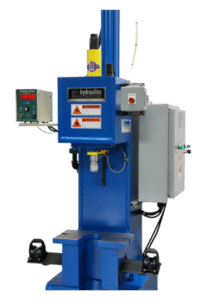
Force monitoring helped our customer meet the data monitoring requirements for their application within their budget.
Or read the Assembly Mag article covering this case study and our C-400 Press ›
Oil Levels
Lubrication is essential for all types of presses. The second item on the complete press performance checklist ensures that you can maintain proper oil levels. For some presses, like hydraulic presses, this process requires a few more steps, while pneumatic presses and hydropneumatic presses are generally less demanding.
For all hydraulic systems, check the oil levels, and make sure the machine has the right amount. Add oil, if needed, using the factory recommended oil listed on the oil tag fitted to the machine. If you repeatedly find that the machine does not have enough oil, this can indicate an oil leak somewhere in the machine. If the oil levels are too high, bleed the hydraulic system to bring the oil to the correct level to avoid issues during use.
For hydraulic presses, it’s also important to check the oil temperature and filter. During operation, the optimal temperature for the oil is about 120 degrees F. The oil should also be free of dirt and debris, and dirty oil should be changed. Your oil filter should also be inspected and replaced if necessary to keep the hydraulic oil clean and it’s also important to check the heat exchanger unit on these machines, and ensure they are free from rust and debris.
Torque
Check the machine cylinder’s tie rods to make sure they’re torqued to the proper specifications. These specifications should be available in the press’s operating manual.
Leaks
Air or oil leaks can quickly reduce the performance of your press and introduce safety hazards. Perform a visual inspection of your machine and look for leaks in air or oil lines, valves, and fittings. Conduct a visual inspection for external oil leaks. Sometimes these leaks are easy to spot, and sometimes a dye may need to be added to assist in identifying smaller, low pressure leaks from the machine. To detect air leaks that are not noticeable upon visual inspection, use a simple solution of soap and water, and spray it over the air lines and connection points. If air is escaping, bubbles will form, and these parts can be replaced.
Frame
Your assembly press’s frame is designed to withstand heavy operation, but it can still be damaged over time. Visually inspect the machine’s frame and cylinder. If you see cracks, chips, or other damage, it’s time for repairs or a replacement. Weak points in the frame can be dangerous, and even small signs of damage can point to larger issues later on.
Take a close look at the machine’s nuts, bolts, and other fasteners. These parts can loosen over time, especially with high-force assembly presses. Loose fasteners can endanger the integrity of the machine, and these parts can also get caught in the machine itself, causing serious damage.
Electronic Systems & Controls
Check your machine’s electronics thoroughly, and look for any points of wear or damage. Coils on valves, for example, have a long useful life, but also wear down over time. Replacing these before they fail will save time and money down the road. Programmatic maintenance controls can monitor these valves and other components more closely, and alert employees when it’s time for replacements.
Specifically check the electronics in and around your control system. Check to ensure your machine’s control wiring is tight, and in good condition. If the wiring is loose or damaged, these should be placed in wire ways, or tied with wire ties. Make sure all spare or unused wires are capped off or removed. Finally, check the enclosure and remove any dust, dirt, or debris.
Safety Mechanisms
Regularly checking safety mechanisms is a key part of your press performance checklist. This step will help to protect your employees, guard against unplanned downtime, and help to protect your press’s overall performance. This step may vary depending on which safety mechanisms you’re using.
For example, light curtains should be checked daily. This can be tested by breaking the beam while the ram is in testing operation. If this doesn’t put the machine into its intended safe condition, then the machine should be locked out until the mechanism can be inspected further.
Cycle Testing
Perform cycle testing to make sure the mechanical system, as well as the electrical systems are both working properly. If the machine’s cycle testing isn’t performing as intended, the press equipment will probably need additional downtime for maintenance or will require replacement.
Use This Checklist Regularly
This press performance checklist can help you avoid unplanned downtime and expensive repairs. Taking care of your machine is essential to maintaining its performance. With the right preventive maintenance and check-ups, you can keep your machine running for many years to come.