When to Choose an Air-Over-Oil Press for Assembly Applications

when to choose an air over oil press for assembly applications

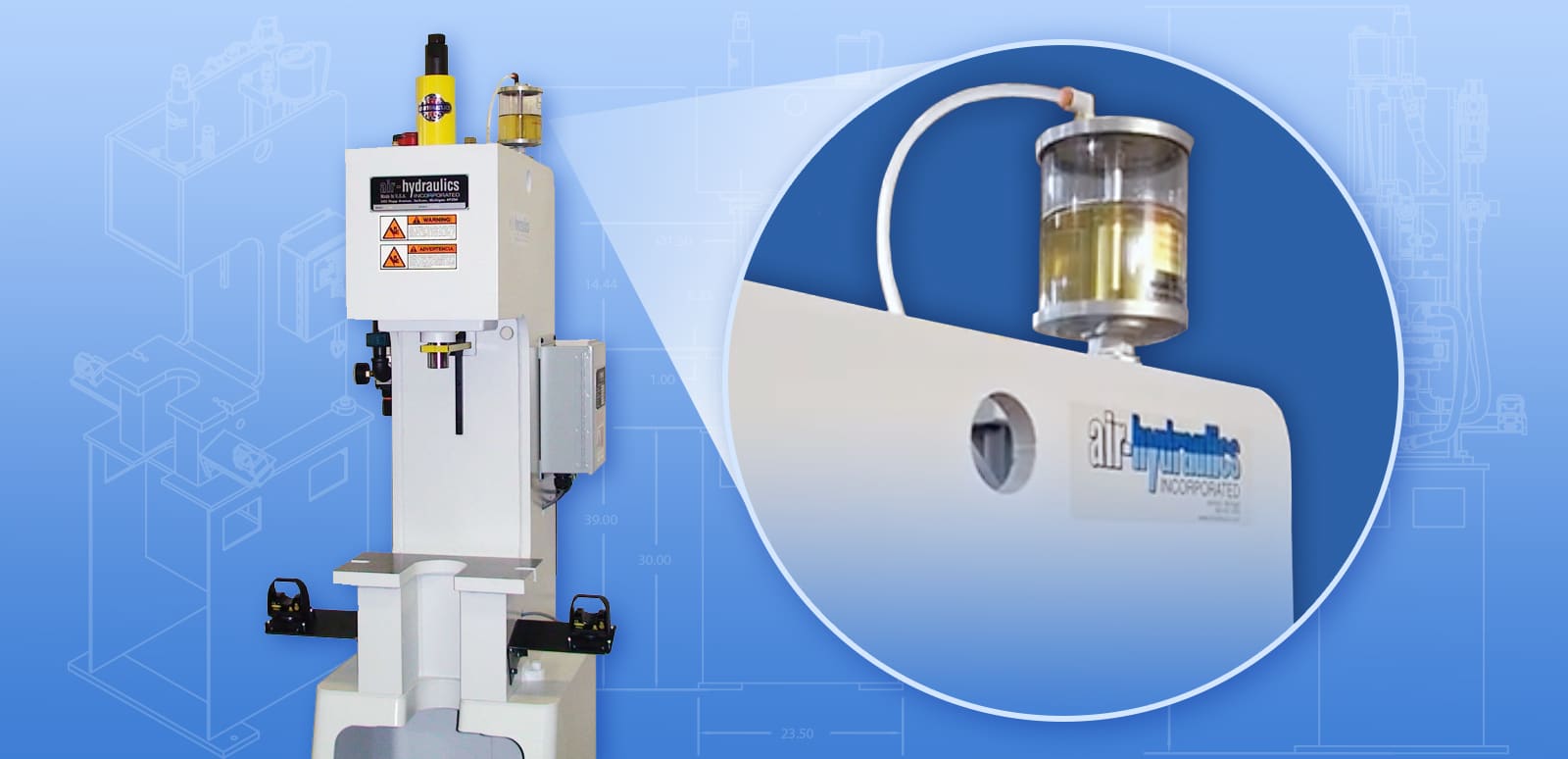
Among the many types of presses available, the air-over-oil press offers a unique combination of power and simplicity, as well as energy efficiency and lower costs. But, it can be difficult to determine when an air-over-oil press is ideal. Let’s take a look at what air-over-oil presses are, how they work, and when to choose an air-over-oil press for assembly applications.

What is an Air-Over-Oil Press?

An air-over-oil press, also called a hydropneumatic press, combines the simplicity of pneumatic systems with the precision and power of hydraulics. This combination allows manufacturers to achieve smooth, consistent force with a compact and relatively cost-effective system. Unlike standard pneumatic presses, which can sometimes lack the precision required for delicate assembly tasks, the hydraulic oil in an air-over-oil system provides stability and accuracy even at higher pressures.

Because of its hybrid nature, an air-over-oil press can also deliver higher force output than a purely pneumatic system while maintaining better energy efficiency and using less oil compared to fully hydraulic systems. This makes it a versatile solution for a range of factory assembly needs.

How Does an Air-Over-Oil Press Work?

The air-over-oil press operates in two main stages. First, compressed air is introduced into the system, pressurizing the hydraulic oil in the reservoir. This pressurized oil is then directed into the hydraulic cylinder, which moves the ram to perform the pressing action. This two-stage process allows for fine-tuned control over the force applied, making it possible to perform tasks that require substantial power. Additional systems, such as force and distance monitoring systems, can offer even more fine-tuning to detect defective parts during the pressing process, preventing costly field-failures.

Air-over-oil presses also allow for variable stroke speeds, which means the press can operate quickly for light tasks or it can slow down for jobs requiring greater accuracy. Additionally, many air-over-oil presses are equipped with features like pressure gauges, adjustable stroke lengths, and programmable controls, offering even more flexibility in assembly applications.
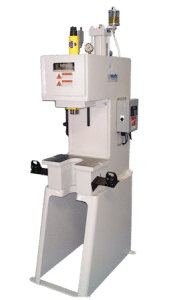
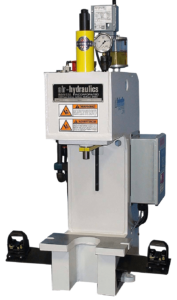
C-Series
Air Over Hydraulic Press

Applications: Bushing/Bearing Insertion, Stud Insertion, Swaging, Trimming, Marking or Character Stamping, Assembly, Notching, Joining, Forming, and Fastening

AH Series Hydropneumatic Press

AH-Series
Hi/Lo Air Over Oil Press

Applications: Riveting, Crimping, Punching, Swaging, Trimming, Marking or Character Stamping, Assembly, Notching, Joining, Forming, and Fastening

When to Choose an Air-Over-Oil Press for Assembly Applications

Air-over-oil presses are versatile and well-suited for many assembly applications, particularly those that demand a balance of precision, controlled force, and repeatability. Below are some examples of tasks where these presses excel, along with specific scenarios to highlight their advantages.

Delicate Assembly Work

Air-over-oil presses are ideal for delicate assembly tasks where precision and control are critical. For example, when assembling sensitive electronic components, such as circuit boards or sensors, excessive force or sudden impacts can damage the fragile parts. The smooth and controlled motion of an air-over-oil press minimizes these risks, ensuring the parts are pressed or joined without damage. Similarly, these presses are often used in the assembly of medical devices, such as syringes or inhalers, where consistent results and a gentle touch are essential to ensure product safety and functionality.

Metal Stamping and Forming

For light to medium metal stamping or forming applications, air-over-oil presses provide the steady force needed to shape or cut metal components with precision. For instance, in the production of small brackets, connectors, or enclosures for electrical equipment, air-over-oil presses deliver clean cuts and uniform shapes. They are also commonly used for shallow metal embossing, where patterns or logos are stamped into sheets of metal without compromising the material’s structural integrity. The press’s ability to maintain consistent pressure ensures high-quality results, even for intricate designs.

Plastic Joining and Bonding

Air-over-oil presses are widely used for pressing plastic components together or bonding them during assembly. For example, in the automotive industry, they are employed to assemble plastic parts such as dashboard components or trim pieces, where precise alignment and consistent force are crucial to achieving a seamless fit.

Air-over-oil presses are also effective in ultrasonic welding applications, where the press applies controlled pressure while ultrasonic vibrations create a strong bond between plastic parts. The ability to finely adjust the press’s stroke length and force ensures that delicate plastic materials are not over-compressed or damaged during the process.

Press-Fit

Press-fit jobs, where one component is inserted into another with a precise fit, is another area where air-over-oil presses excel. A common example is inserting bearings, bushings, or dowel pins into machined parts, such as engine components or industrial machinery. The controlled motion of the press ensures that the parts align correctly and press into place without tilting, cracking, or excessive force.

In the aerospace industry, air-over-oil presses are often used for assembling precision components where even minor deviations could lead to performance issues or failures. The combination of accuracy and repeatability makes these presses an excellent choice for press-fit tasks.

Why Choose an Air-Over-Oil Press for These Jobs?

The air-over-oil press stands out for its ability to balance precision and power. Its advantages over purely pneumatic or hydraulic systems include:

  • Energy Efficiency: Because compressed air drives the system, hydropneumatic presses use less energy compared to fully hydraulic systems, especially in applications where high force is only needed intermittently.
  • Cost-Effectiveness: These presses are typically less expensive to purchase and maintain than full hydraulic systems, making them an excellent choice for factories seeking high performance without breaking the budget.
  • Compact Design: Air-over-oil presses are often more compact than equivalent hydraulic presses, allowing them to fit into tighter spaces on the factory floor.
  • Enhanced Precision: The use of hydraulic oil ensures consistent, smooth motion, even during high-force applications, making these presses ideal for jobs that require tight tolerances.
  • Grows With You: With a wide range of force output and a number of features increasing their versatility, air-over-oil presses will be able to grow with your factory. These presses can perform different tasks and work with different materials as you expand your jobs and capabilities.

Choosing the right press for your assembly application is critical to ensuring efficiency, precision, and cost savings. Air-over-oil presses provide a great balance of power and precision, making them ideal for a wide range of light to medium assembly tasks. Their versatility, energy efficiency, and compact design make them a valuable addition to any production line. If your looking for an air-over-oil press for assembly applications, we can help. Contact us today to learn more about highly efficient, cost-effective air-over-oil presses.
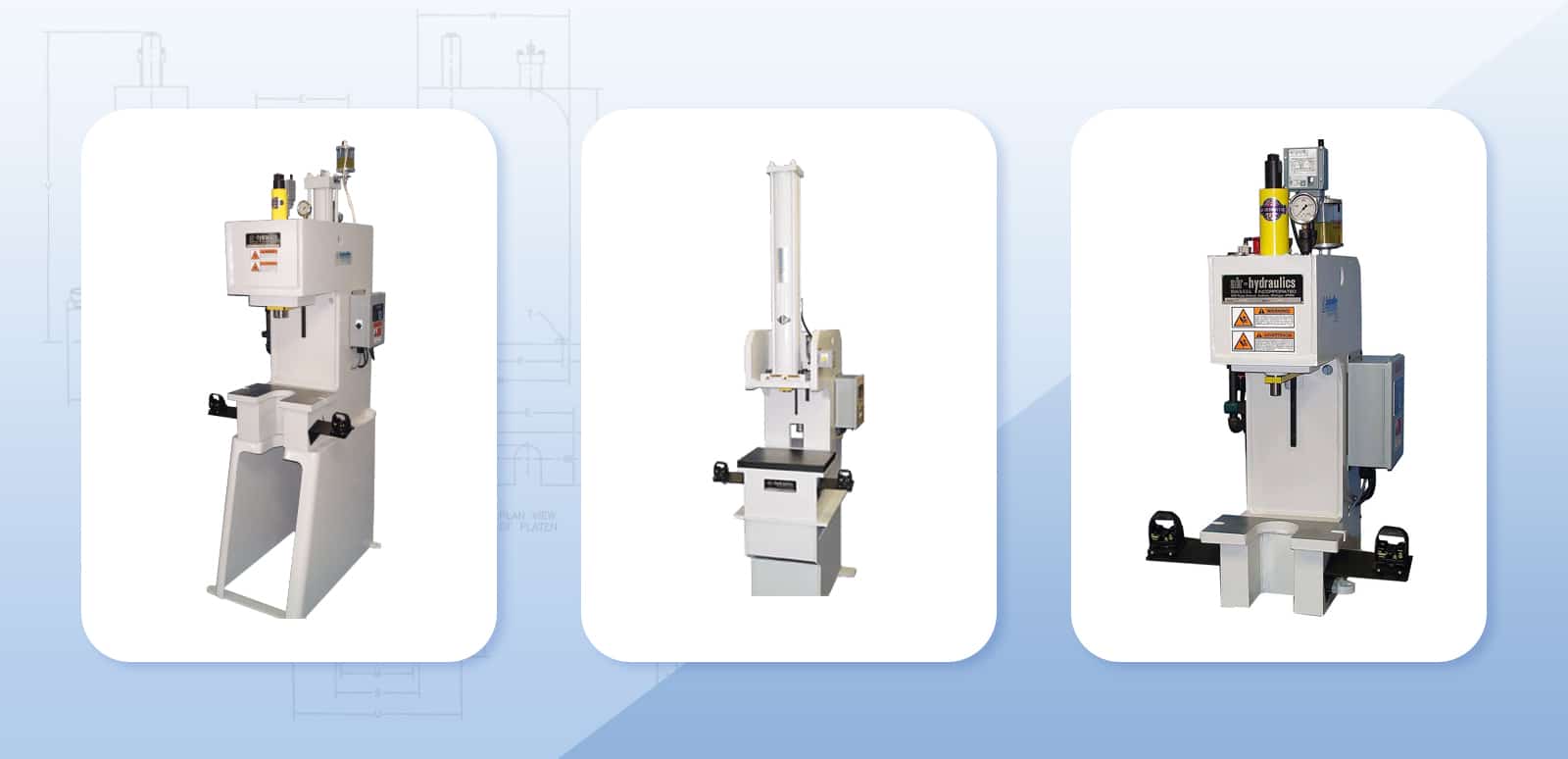
5 Advantages of an Air Hydraulic Press

An air hydraulic press, otherwise known as an air-over-oil or hydropneumatic press, is a powerful type of industrial press used in a wide variety of manufacturing and assembly applications. There are many advantages to these presses and if you’re considering a new press for your business or manufacturing operation, an air-over-oil press may be a perfect fit. Let’s take a look at the advantages of an air hydraulic press, as well as how these presses work.

What is an Air Hydraulic Press?

An air hydraulic press uses a combination of compressed air and compressed hydraulic oil to generate force for pressing, forming, or stamping operations. Unlike traditional hydraulic presses, which rely solely on pump driven motors to move hydraulic fluid for their cylinder operation and are powered by high-voltage energy supply, air-over-oil presses are powered by compressed air and either pneumatically or 110vac controlled.

Air over oil presses are highly efficient compared to a full hydraulic press. They do not require a pump, motor or large hydraulic reservoir. Instead, they rely on a small amount of self-contained hydraulic oil to provide the necessary power, speed, and precision for a wide range of applications.

Our AH-Series Hydropneumatic Press to the right, is an air hydraulic press with a low force, quick approach stroke that initiates a self-contained hydraulic intensified power stroke, with models ranging up to 50 tons.

How Does an Air Hydraulic Press Work?

In an air hydraulic press, compressed air is used to drive a pneumatic cylinder or a section of that cylinder to extend or cycle the press. At some point in the extension of the cylinder, the self-contained oil is intensified or compressed, allowing the press to generate a consistent high-pressure fluid power stroke.

The air hydraulic press typically uses a pneumatic control system that regulates air pressure and flow to control the speed and force of the press stroke. Additionally, the hydraulic intensified system provides smooth and consistent force application, ensuring uniform part quality and accuracy in manufacturing processes.

Air-Hydraulics C-Series Air-Over-Oil Press

Air-Hydraulics Inc. provides a proprietary and unique press model which innovates on the common hydropneumatic press functionality to enable a full power stroke. This is our C-Series Air-Over-Oil press line.

This innovative press model delivers a full length hydraulic intensified power stroke, instead of the typical .500” power stroke. The full power stroke is made possible through a single pneumatic or electric power valve, which shifts and actuates an intensifying cylinder (booster cylinder). This compresses the self-contained hydraulics fluid in the booster cylinder directly into a separate working cylinder (ram cylinder) to intensify the entire press working stroke. This operation functions just like a full hydraulic press, except it is powered by factory supplied air and can be controlled by all pneumatic controls or 110VAC/24VDC powered controls.

Learn more about a hydraulic intensified booster cylinder to power your press
See how it works »

Advantages of an Air Hydraulic Press

Now, let’s take a look at some of the advantages of an air hydraulic press. The air-assisted operation of the hydropneumatic press provides a number of benefits over a hydraulic press which are important to consider when choosing a press.

1. High Speed and Efficiency

One of the advantages of an air-over-oil press is its ability to deliver quick cycling speeds and high production rates. By incorporating compressed air into the press operation, it can achieve faster approach, dwell, and return speeds compared to some traditional hydraulic presses. This increased speed and efficiency result in shorter cycle times and higher throughput, ultimately maximizing productivity and reducing manufacturing costs.

2. Easy Installation and Setup

Air hydraulic presses have a simple installation and set up when compared to other factory press equipment. It’s as easy as installing a properly sized compressed-air line hook up into the lockout valve and plugging the electrical control package into a common 120vac outlet. Some machines don’t have an electrical control package at all and simply require the compressed-air line hook up. Compare this with the costs required to get 3-phase power set up for other types of factory press equipment. Since our air-over-oil presses require very little hydraulic oil, they arrive pre-filled and ready to go, whereas hydraulic presses will require filling with hydraulic oil upon arrival, and testing to ensure the press is in proper working condition before running.

3. Energy Efficiency

Air-over-oil presses are known for their energy-efficiency compared to hydraulic presses. By harnessing the power of compressed air, these presses can achieve high force capabilities without the need for continuous electrical power / high-voltage energy supply. This results in reduced energy consumption and lower operating costs compared to traditional hydraulic presses, making air-over-oil presses a sustainable and cost-effective solution for manufacturers.

4. Versatility and Flexibility

Air hydraulic presses are versatile machines that can be adapted to a wide range of manufacturing applications and industries. They can accommodate various tooling configurations, part geometries, and materials, making them suitable for diverse production needs. Additionally, the flexibility of the pneumatic control system allows for quick setup changes and easy integration into automated manufacturing lines, enhancing production flexibility and scalability.

5. Quiet Operation and Minimal Maintenance

Unlike some hydraulic presses, which can be noisy and require frequent maintenance, air hydraulic presses are known for their quiet operation and minimal maintenance requirements. The pneumatic components of the press are often more durable and reliable, resulting in reduced downtime and lower maintenance costs over the press’s lifespan.

The benefits of an air hydraulic press include efficiency, consistent performance, smooth operation, versatility across applications, and quiet operation with less maintenance. These advantages make air hydraulic presses an attractive choice for manufacturers seeking to optimize their pressing operations and enhance productivity. To learn more about air-over-oil presses, including the C-Series Air-Over-Oil press line or hydraulic intensified booster cylinder, contact us today.

Interested in an Air-Over-Oil Press for Your Production?

Manufacturing Processes that Benefit from Pneumatic Rotary Index Tables

rotary index table

Rotary index tables can help to improve a wide variety of manufacturing processes with simple automation for positioning and indexing. The ability to quickly rotate and position a workpiece or component has made it possible to speed these processes up, while also improving accuracy. Indexing, or positioning, tables can be electrically driven, servo driven or pneumatically powered. Let’s take a closer look at pneumatic rotary index tables, and what processes they might be used for.

What is a Rotary Index Table?

A rotary index table is a mechanical device used in manufacturing and machining processes to position and rotate workpieces at specific intervals during a production cycle. It is primarily used to improve the efficiency of operations by allowing precise, automated positioning of the workpiece. This makes it possible to perform multiple operations without the need for manual repositioning, thus speeding up the process and improving accuracy by removing human error.

How Does a Rotary Index Table Work?

The basic design of a rotary index table consists of a circular platform that can rotate about its center axis. The workpiece is securely mounted onto this platform, and the table then turns the workpiece to predetermined positions.

The rotary index table works by integrating with another process through a control system. The control system governs the movement and indexing of the table, ensuring accurate positioning for each operation. Some rotary index tables are manually controlled, while others can be synchronized with the overall manufacturing control system and for fully automated production.

9 Manufacturing Processes that Benefit from Pneumatic Rotary Index Tables

A rotary index table is a versatile tool that can enhance a variety of manufacturing processes, making the process faster and more accurate, with fewer defects. Electric or servo driven rotary index tables can be applied to many of the following processes, but there are clear advantages in terms of efficiency and setup for using a pneumatically powered indexing table, over an electrically operated unit. Pneumatic indexing, or positioning, tables also come at a much lower investment cost than their electric or servo driven counterparts. The following manufacturing processes can benefit from pneumatic rotary index tables:

1. Machining and Milling

Rotary index tables are commonly used in machining and milling processes to work on multiple sides of the workpiece in quick succession. The ability to rotate the workpiece to different positions quickly makes it possible to work on multiple faces without the need for manual repositioning. This way, even complex components can be completed quickly. The rotary index table can automatically move the workpiece as needed, which reduces the need for manual intervention or monitoring.

2. Assembly

Assembly can significantly eat into production times. Rotary index tables can speed up this process. In assembly lines, rotary index tables can be used to position components for assembly to a specific location for the next operation. When fitting pieces together, adding fasteners, or completing other tasks, a rotary index table will move parts quickly at the appropriate time and location. This ensures a constant and accurate workflow of the assembly process.

50 ton hyrdopneumatic press indexing machine for custom fixture staking and crimping application

We custom design assembly presses to integrate with rotary index table automation.

Request a Custom Press Quote Today ›

3. Inspection and Quality Control

Quality control is essential to ensure defective products do not make it into circulation. For thorough inspection, a rotary index table can be used to present different surfaces of a product to inspection equipment or cameras. This allows for comprehensive quality control checks, ensuring that each aspect of the product meets the specified standards.

4. Welding

Welding operations benefit from rotary index tables by allowing exact positioning of parts for a welder to approach at various angles. This is particularly useful for fabricating complex structures where welding needs to be performed on multiple surfaces.

5. Engraving and Marking

Rotary index tables are valuable in engraving and marking processes. The ability to rotate the workpiece enables consistent and accurate marking on different sides, contributing to efficient product labeling and identification.

6. Laser Cutting and Etching

Laser cutting and etching processes can be improved with a rotary index table by enabling the laser to access different areas of a workpiece. This is particularly beneficial for intricate designs or for making multiple cuts on various surfaces.

7. Grinding Operations

In grinding applications, a rotary index table can be utilized to present different surfaces of a workpiece to the grinding wheel. This allows for uniform material removal and precise shaping of the part.

8. Painting Applications

Rotary index tables can also be used for various painting or preparation applications. Similarly to grinding applications above, a positioning table can present different faces of a part automatically to be sandblasted or sprayed with paint evenly. For sandblasting applications, this speeds up the process, and for painting, this offers the added benefit of removing any part handling until the evenly applied paint has set and dried.

9. Hazardous or Explosion-Proof Applications

For manufacturing applications within hazardous environments, where explosion-proof equipment is necessary, pneumatic rotary indexing tables have a clear advantage over servo or electrically driven positioning tables. Manufacturing environments with ignitable, flammable, or combustible atmospheres often prohibit the use of electricity, as any spark could cause an explosive reaction. For these environments, pneumatically powered indexing tables offer the benefit of simple automation within explosion-proof requirements.

In summary, the versatility of rotary index tables makes them a valuable asset in various manufacturing processes, offering enhanced precision, efficiency, and flexibility in the production of complex components and products. To learn more about pneumatic rotary index tables across different pressing processes, including stamping, joining, marking, and more, contact us today.

Rotary Index Table  Rotary Index Table. Rotary Index Table

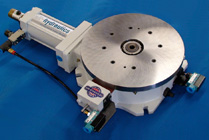
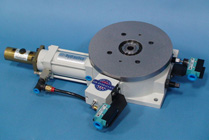
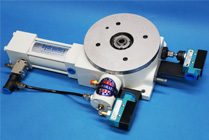
Air Hydraulics Pneumatic Rotary Index Tables

We offer three models of low profile, heavy duty pneumatic rotary index tables that are perfect for many manufacturing processes.

How to Bleed Your C-Series Air-Hydraulics Press

how to bleed your c-series air hydraulics press

If your Air-Hydraulics C-Series Press isn’t performing consistently, or it is not reaching the proper pressure, air may be trapped in the hydraulic system, causing cavitation. Bleeding the press can eliminate the cavitation and restore the press to normal. Let’s take a look at how you can identify cavitation and the specific operation for bleeding the C-Series Air-Hydraulics press.

Already know cavitation is the issue? Jump right to the bleeding procedures.


Identify Cavitation

First, it’s important to identify that cavitation is indeed the problem that your press is experiencing. If another issue is at work, bleeding the press won’t be very effective in solving the problem. Or, it might provide only a temporary solution, and cavitation may occur again if the source of the problem isn’t fixed.

Check valves, seals, and other wear parts to be sure they are in good working order. Check that the machine’s fasteners are secure, and haven’t loosened from repeated use. Monitor the oil reservoir at the top of the press, check the lines, and make sure all parts are working properly.

What Does Cavitation Look Like?

How do you know if your press is experiencing cavitation? As previously mentioned, cavitation occurs when air becomes trapped in the hydraulic system. These air bubbles might get trapped if something interrupts the flow path, such as a plugged filter. Or, if air escapes through a damaged seal, it can introduce air pockets. Damaged or defective seals can cause repeated cavitation.

Cavitation may be occurring if you notice that the smooth movement of the press has become inconsistent. Or, the system might repeatedly fall short of the required pressure. You might also notice a high-pitched whining sound from the press, which occurs as the air pockets collapse and produce a shock-wave. These shockwaves will damage the press over time. The most obvious indicator is that the oil reservoir may appear full or even overflowing. In any of these situations, air cavitation may be the culprit.

Signs of Cavitation:

  • Erratic or inconsistent press cycle
  • Failure to meet required pressure
  • High-pitched whining
  • Full or overflowing hydraulic oil reservoir

Aeration is similar to cavitation, but not the same. Aeration is usually caused by an air leak on the suction side that causes outside air to enter the system. If aeration occurs, you might notice an irregular whining sound, or a grinding sound, or both.

What Can Cause Air Cavitation?

Here are a few things that cause air cavitation in the C-Series Air-Hydraulics Press and how to prevent the problem from recurring

  • Damage or worn-out seals, air builds into the hydraulic system
    • Solution: replace seals
  • Drifting of the press ram, allowing the ram piston and booster piston to not be in sync. This will cause a suction or vacuum effect and drain the oil reservoir
    • Solution: block up ram and or tooling when the press is not in use for a long period of time or when air is shut off to the machine.
  • Press ram getting stuck in the down position when the press cycle is returning. This also causes a suction or vacuum effect, pulling air into the system.
    • Solution: bleed press system
  • Oil reservoir completely drains, pulling air into the hydraulic system
    • Solution: bleed system and refill reservoir. Add preventative maintenance schedule to check reservoir periodically

How to Bleed Your C-Series Air-Hydraulics Press

Collect Your Materials

Once you’ve identified that cavitation is the problem, you’ll need to gather your materials. To bleed the press, you’ll need the following:

  • DTE 24 hydraulic fluid or equivalent
  • Wrench
  • Shop rags

Lock-Out, Tag-Out

Before performing any maintenance or repair procedures on the press, it’s critical to perform lock-out, tag-out (LOTO) procedures on the control and airline connection. LOTO procedures prevent the machine from accessing energy of any kind, so it is impossible for the machine to function while you are working on it. In addition to lock-out, tag-out procedures, it’s also important to ensure that the ram is fully in the “up” position.

Bleed the Press

Now that it’s safe to work with the press, you can bleed the press. First, locate the cap on the top of the booster, near the back of the press and slowly remove the cap from the booster. When you do, and cavitation is present, you may see the oil start to bubble and foam. You might also see the oil reservoir begin to drain, though you should not let the reservoir drain completely. If the reservoir drains completely, it can introduce additional air into the system. Wait for about five to ten minutes, until the foaming or bubbling stops. Then, refill the booster with Mobil DTE 24 hydraulic oil or equivalent. Then refill the reservoir to the fill line. Replace the cap, and make sure it is secure. Then, remove the lockout tag, and cycle the press several times. If the oil reservoir raises, then you’ll have to repeat the bleeding procedures. If the oil reservoir drains, top it off to the fill line.

Bleeding the press will remove the air that has been trapped in the hydraulic system. To safely bleed the press and avoid damage to the system, this procedure must be done with care. This video will take you through the steps to bleed your C-Series Air-Hydraulics Press.

Step-by-Step C-Series Air Hydraulic Press Bleeding Procedure

Gather materials (wrench, shop rags, and Mobil DTE 24 Hydraulic oil) and go through the following steps:

  1. Follow standard lock out, tag out procedures
  2. Locate the cap on the top of the booster, on the back of the press
  3. Slowly remove the cap on the fitting
    If air is in the system, oil will begin to bubble and foam from the top of the booster. The oil reservoir may also begin to drain – do not let the hydraulic oil completely drain out, as this will cause additional air to be pulled into the system)
  4. Refill the booster with hydraulic oil to the top of the cylinder head after the system is stable and no more foaming or bubbling is occuring (about 5-10 minutes)
  5. Also, refill the reservoir half way or to the fill line
  6. IMPORTANT: Make sure the cap is replaced and fully tightened before operating
  7. Remove lock out tag out and cycle the press several times
  8. Look for continued issues or rising or draining oil levels from the reservoir; if indicators of cavitation continue, you may need to repeat the bleeding procedure
  9. If you have to repeat the bleeding process several times, you may have worn out seals that need to be replaced.

If you experience any issues with the bleeding procedure or need replacement seals or parts for your C-series press,we would be happy to help. Please contact us on our site or call 517-787-9444 for assistance.

Troubleshooting

If the press continues to operate inconsistently, or if you notice the oil reservoir rises or falls, try repeating the bleeding procedure. Also, check the integrity of the seals. If your press continues to experience issues after the bleeding procedures have been followed, or is not performing properly, Air-Hydraulics can help. Contact us for more information on the C-Series press, or other press models.

Don’t have a C-Series Air-Over-Oil Press?

Take a look at this energy efficient hydraulic press alternative for industrial applications requiring 2.5 to 15 tons for force.

What is a Hi/Lo Hydropneumatic Cylinder? 

Getting the right balance of force, speed and efficiency with your industrial press equipment is essential for consistent, repeatable and sustainable manufacturing or assembly operations. Presses equipped with a hi/lo hydropneumatic cylinder may be the perfect solution to your application needs, but to find out, it’s key to understand these cylinders and what makes them ideal for many production applications. Let’s take a closer look at what a hi/lo hydropneumatic cylinder is, what it does, and what benefits it can extend to your industrial press system.

What is a Hi/Lo Hydropneumatic Cylinder?

A hi/lo hydropneumatic cylinder relies on compressed air as the power source and uses self-contained hydraulic fluid to produce hydraulic intensified pressure. It may also be called an intensifier cylinder, air-over-oil cylinder, or simply a hydropneumatic cylinder.

View details and specifications on our AH-Series 4 ton to 50 ton Hi/Lo Hydropneumatic Intensifying Cylinders >

How Does a Hi/Lo Hydropneumatic Cylinder Work?

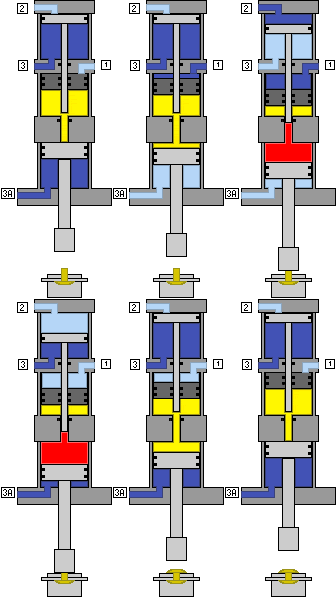
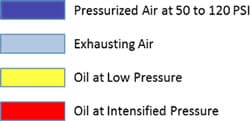
Hilo Press AnimationThe hi/lo hydropneumatic cylinder uses compressed air and hydraulic oil to multiply the force behind the press. In general, the cylinder goes through these steps:
  1. A pneumatic valve is energized allowing air into the reservoir section of the cylinder. The reservoir piston extends, displacing hydraulic oil on the top side of the working piston, quickly advancing the cylinder rod at low force.
  2. Once the cylinder rod meets resistance or a certain distance, a secondary valve is energized allowing air to enter the high-pressure section of the cylinder, advancing the high-pressure piston and rod into the reservoir section, thus intensifying the hydraulic oil and producing a high-pressure power stroke.
  3. The cylinder rod retracts once both valves are de-energized, allowing air to return the reservoir piston and high-pressure piston to their full retract position.

Animation Key

Benefits of a Hi/Lo Hydropneumatic Cylinder

A hi/lo hydropneumatic cylinder offers a number of benefits and is suitable for many different applications. Let’s take a look at a few of the benefits of the cylinder, and explore why manufacturers use this device to improve the force and efficiency of their presses.

Increased / Intensified Force

One of the biggest benefits of a hi/lo hydropneumatic cylinder is its ability to amplify the force of a pneumatically powered press, delivering higher force with efficiency. For example, a 5-inch bore pneumatic cylinder produces less than 1 ton of force at 100 psi, but a 5-inch bore hydropneumatic cylinder can deliver force to up to 20 tons. This is ideal for factories that may be expanding into new production or assembly operations, working with new materials, or seeking to increase efficiency of existing operations.

Flexible Power Stroke

The hi/lo cylinder can be sequenced into the power stroke at any point throughout the total stroke of the cylinder. You can decide when the hi/lo cylinder integrates into the power stroke, and decide which device is best to activate the hi/lo cylinder. This includes a time delay, external proximity switch, or a threshold sensor installed directly into the cylinder. This gives you flexible control over the power stroke and allows you to integrate the cylinder into your machine in the way that works best for your control system.

Uses Less Air

The hi/lo hydropneumatic cylinder also allows the machine to exert more force, while using less air. Since it uses hydraulic oil and compressed air together to power the cylinder, it requires less air overall compared to a purely pneumatic press or even full stroke hydropneumatic presses like our C-series Air Hydraulic Presses.

Operates Faster

The hi/lo hydropneumatic cylinder allows for faster operation, which means more efficient production. With the ability to generate the power stroke anywhere within the overall stroke of the cylinder, you can speed up your overall production process.

Self-Contained

The hi/lo hydropneumatic cylinder is completely self-contained, so there is no need for any additional hydraulic reservoirs or tanks. This makes for a smaller footprint and makes these cylinders easier to integrate into existing or future machine design.


Interested in a Hi/Lo Hydropneumatic Press for Your Production?

Our AH-Series Hydropneumatic Presses may be the perfect solution to applications requiring between 4 tons and 50 tons of force.

View Press Models and Information >


A hi/lo hydropneumatic cylinder can be a powerful tool in your factory. These cylinders can augment many existing presses, or provide extra power for new presses. If you have questions about hydropneumatic cylinders, hydropneumatic presses, or other types of presses, contact us. We can help you find the right press for your needs and applications.

Choosing the Right Hydraulic Press for Manufacturing and Assembly

hydraulic press for manufacturing and assembly

Choosing the right type of press can significantly impact productivity and quality at your factory. Let’s take a look at the details of hydraulic presses for manufacturing and assembly, as well as some potential alternatives to hydraulic presses.

Your Press Process

There are many different factory presses to choose from, and finding the right press for your needs means matching the functionality and design of the press to the needs of your process. It’s important to assess your process first, so you know what to look for in a press, and then assess the different options available, so you can find the right fit.

As you assess your process, look for the following:

  • Force: how much force does your process need? A few shortcuts can help you calculate force, which can help you hone in on the right-sized press.
  • Speed: how fast do you need your press to operate? Consider the surrounding processes and your production needs.
  • Job type: will your press be performing one or two jobs repetitively, or will you need to make adjustments to perform a variety of different tasks?
  • Dimensions: consider the dimensions of your part or workpiece, as well as the space available in your shop. This can help you determine the stroke length needed, and the possible footprint of the press.

Hydraulic Presses for Manufacturing or Assembly

The following are a few of the most common presses used in manufacturing and assembly operations. We’ve selected these press types because of their versatility, functionality, stability, and power, which makes them ideal for a variety of different manufacturing and assembly tasks.

HP545C-Frame Hydraulic Press

The C-frame hydraulic press is a versatile choice for manufacturing and assembly. Its open-front design allows easy access to the work area for easier die changing or adjustments and also for material loading, making it suitable for a variety of tasks such as bending, stamping, and forming. Since these presses are often smaller than 2 or 4-post presses by design, they are great choices when you’re dealing with limited floor space but still need the power of full hydraulic force. These presses are typically lower in cost compared to 2 and 4-post hydraulic presses as well.

Hydropneumatic presses are also available with a C-frame design. Air-over-oil presses can provide between 2.5 and 50 tons of force, allowing these models to accomplish many of the same jobs as hydraulic presses.

2 or 4 Post Hydraulic Press

For heavy-duty applications, 2 or 4 post hydraulic presses provide stability and strength. The vertical posts on each side of the working area can either be structural, or have a guided platen that moves along the posts for perpendicularity. In either case the hydraulic cylinder or cylinders are typically mounted at the top of these posts.

With non-guided 2- or 4 – post hydraulic presses, the structural configuration simply offers more room for larger pieces of working material. Guided systems provide an even surface area of pressure, exerting force horizontally along the surface area of the guided platen, ensuring perpendicularity for tasks that require a consistent and uniform application of force. These configurations may be required for punching several dies from a sheet of metal, foam or plastic, or for other applications like metal forming and pressing over a large surface area.

Alternatives to Hydraulic Presses

The following presses are not full hydraulic presses, but they fit the bill for jobs and applications that require hydraulic power and often come with higher efficiency and lower cost and maintenance, so they are worth mentioning in the same vein. These are hydropneumatic presses, the first of which is something uniquely designed to function just like hydraulic, with a higher return on ROI.

Rapid Advance Low-Force Hydraulic Intensified Air-Over-Oil Press

15 Ton HiLo PressA hydropneumatic press is a great alternative to a purely hydraulic press for manufacturing and assembly. The Air Hydraulics line of AH-Series Hydropneumatic Presses provide a range of 4 to 50 tons of force. Since this model combines pneumatic and hydraulic forces, it works faster than a purely hydraulic press, and also requires less maintenance and initial investment. This model’s rapid, low-force approach stroke uses a hydraulic-intensified half-inch power stroke, providing a strong finish to a steady procedure, and also provides a low-cost, energy-efficient alternative to a single or 3-phase high voltage hydraulic power unit.
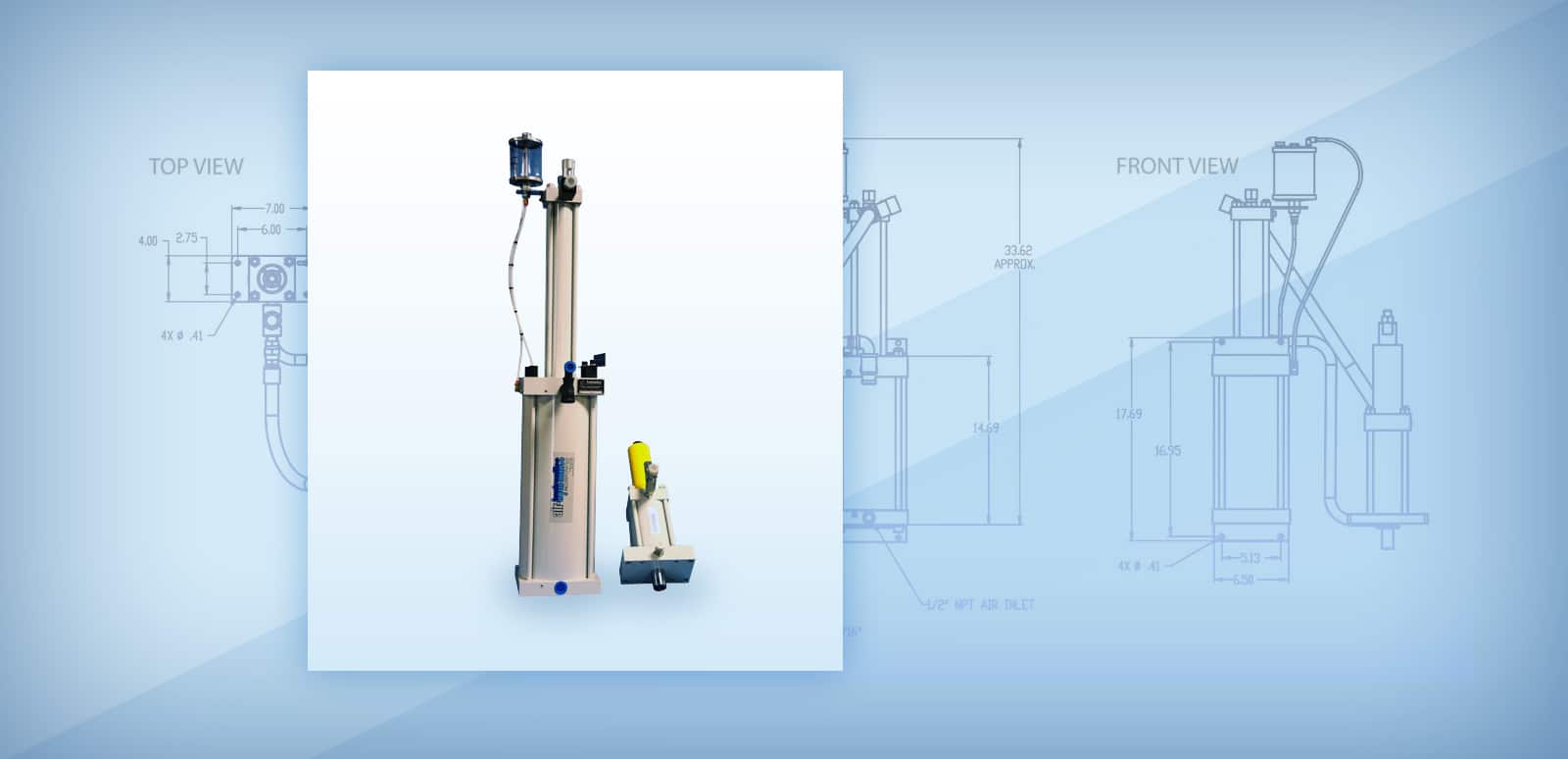
Full Powerstroke Air-Over-Oil Presses

While most hydropneumatic presses deliver intensified power within a half-inch of the cylinder stroke, air-over-oil presses designed with full power strokes like our unique C-Series Air Hydraulics Presses, can be the perfect alternatives to medium force hydraulic presses.

These presses combine the advantages of hydraulic and pneumatic systems, offering a full power stroke like their hydraulic counterparts, but using compressed air for the return stroke, providing efficiency and speed. The full powerstroke air-over-oil model press provides between 2.5 and 15 tons of force, with pressure maintained throughout the entire stroke. This type of press is ideal for bushing or bearing insertion, press fit, stud insertion, and many other manufacturing and assembly tasks. These presses provide the force of a hydraulic press, with reduced maintenance demands, increased speed, quieter operation, no high-voltage power requirements and a lower upfront investment cost.


View our Air Hydraulic C-Series Presses ›


Choosing the right press for manufacturing and assembly involves a careful consideration of force, speed, and control. Hydraulic presses, along with their alternatives, offer a spectrum of options. By understanding the nuances of each type, manufacturers can make informed decisions that contribute to the efficiency and success of their operations. If you’re wondering about which press is ideal for your manufacturing or assembly needs, contact us. We can help you find the right design, force, and features for your application.

Get a quote on the perfect press for your job or project

Provide a few details on your application requirements and any specific or custom features you’re looking for and we’ll get you a quote for the best press for the job.

Alternatives to Hydraulic Presses

The following presses are not full hydraulic presses, but they fit the bill for jobs and applications that require hydraulic power and often come with higher efficiency and lower cost and maintenance, so they are worth mentioning in the same vein. These are hydropneumatic presses, the first of which is something uniquely designed to function just like hydraulic, with a higher return on ROI.

Rapid Advance Low-Force Hydraulic Intensified Air-Over-Oil Press

15 Ton HiLo PressA hydropneumatic press is a great alternative to a purely hydraulic press for manufacturing and assembly. The Air Hydraulics line of AH-Series Hydropneumatic Presses provide a range of 4 to 50 tons of force. Since this model combines pneumatic and hydraulic forces, it works faster than a purely hydraulic press, and also requires less maintenance and initial investment. This model’s rapid, low-force approach stroke uses a hydraulic-intensified half-inch power stroke, providing a strong finish to a steady procedure, and also provides a low-cost, energy-efficient alternative to a single or 3-phase high voltage hydraulic power unit.
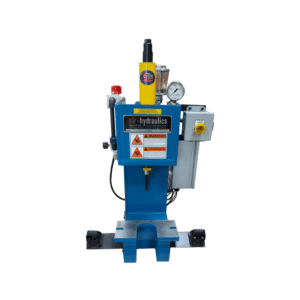
Full Powerstroke Air-Over-Oil Presses

While most hydropneumatic presses deliver intensified power within a half-inch of the cylinder stroke, air-over-oil presses designed with full power strokes like our unique C-Series Air Hydraulics Presses, can be the perfect alternatives to medium force hydraulic presses.

These presses combine the advantages of hydraulic and pneumatic systems, offering a full power stroke like their hydraulic counterparts, but using compressed air for the return stroke, providing efficiency and speed. The full powerstroke air-over-oil model press provides between 2.5 and 15 tons of force, with pressure maintained throughout the entire stroke. This type of press is ideal for bushing or bearing insertion, press fit, stud insertion, and many other manufacturing and assembly tasks. These presses provide the force of a hydraulic press, with reduced maintenance demands, increased speed, quieter operation, no high-voltage power requirements and a lower upfront investment cost.


View our Air Hydraulic C-Series Presses ›


Choosing the right press for manufacturing and assembly involves a careful consideration of force, speed, and control. Hydraulic presses, along with their alternatives, offer a spectrum of options. By understanding the nuances of each type, manufacturers can make informed decisions that contribute to the efficiency and success of their operations. If you’re wondering about which press is ideal for your manufacturing or assembly needs, contact us. We can help you find the right design, force, and features for your application.

8 Benefits of Air-Over-Oil Intensifiers

Air-over-oil intensifiers, also known as air-oil boosters, are devices designed to amplify the force generated by a pneumatic system by utilizing hydraulic principles. These intensifiers play a crucial role in applications where a higher force is required than what a standard pneumatic system can deliver. Let’s take a look at how air-over-oil intensifiers work, and what benefits they can provide.

How Air-Over-Oil Intensifiers Work

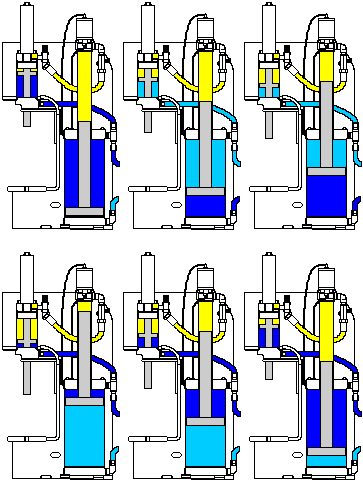
Air-over-oil intensifiers use a combination of shop air, a pneumatic cylinder, and a hydraulic cylinder to intensify the force generated. Let’s see how this process works, step-by-step.

  • Compressed air actuates the pneumatic cylinder, which, in turn, moves a piston.
  • As the piston in the pneumatic cylinder moves, it displaces hydraulic fluid (oil) from the hydraulic cylinder.
  • The hydraulic cylinder typically has a smaller diameter than the pneumatic cylinder. This size difference creates a force multiplication effect.
    Pascal’s law dictates that the pressure in a confined fluid is transmitted equally in all directions. Therefore, the force applied to the large pneumatic piston transfers to the hydraulic piston, resulting in an increased force output.
  • The return stroke of the system is often accomplished using a spring or by allowing the compressed air to push the hydraulic fluid back into its reservoir.
  • This allows for a force output on par with that of a hydraulic system within a half-inch power stroke, but with the speed advantages of a pneumatic system. Certain models can achieve a full length power stroke, like in our C-Series Air Hydraulic Presses.

Air-Hydraulics offers two lines of Air-Over-Oil Intensifying Cylinders that use shop air to deliver between 2.5 tons to 50 tons of force. Learn more ›


Benefits of Air-Over-Oil Intensifiers

Air-over-oil intensifiers combine pneumatic speed and hydraulic force, giving them a number of functional and cost-saving benefits. Here are some key benefits of using an air-over-oil intensifier or air-oil booster.

1. Force Multiplication

The primary advantage of an air-over-oil intensifier is its ability to multiply force. By using the principles of hydraulic systems to amplify the force generated by compressed air, these intensifiers allow for higher forces than what a pure pneumatic system could achieve.

2. Increased Speed

how to prepare your press for a safety inspectionPneumatic systems are known for their speed and responsiveness. Air-oil boosters maintain this characteristic, providing rapid actuation and quick cycling of the system.

3. Efficiency

The intensification of force allows for more efficient use of energy. With a relatively small input of compressed air, the system can produce a significant force output, making it energy-efficient for applications that require intermittent high force. By contrast, fully hydraulic systems demand high levels of energy.

4. Cost-Effective

Compared to a full hydraulic system, air-oil boosters are more cost-effective. They offer the benefits of hydraulic force multiplication without the need for a large and complex hydraulic system.

5. Flexibility

Air-oil boosters offer flexibility in terms of force control. The operator can adjust the force output by regulating the air pressure, providing versatility for different applications and materials.

6. Compact Design

Air-over-oil intensifiers often have a more compact design compared to traditional hydraulic systems. This compact size makes it possible to fit into small spaces, while still offering a high level of power and force.

7. Intermittent Use

Air-oil boosters are well-suited for applications that involve intermittent use of high force. While continuous operation may lead to heat buildup, in scenarios with occasional heavy-duty requirements, air-over-oil intensifiers offer an effective solution.

8. Reduced Hydraulic Infrastructure

Compared to a full hydraulic system, the infrastructure requirements for an air-over-oil intensifier are typically simpler. Essentially, air-over-oil cylinders need only shop air to operate and hold no more than 1-2 gallons of oil, whereas hydraulic systems rely on reservoirs of 25 gallons or more, which can take up a decent amount of space. Hydraulic systems also require a high voltage power source, as well as a high level of maintenance. Using air-over-oil boosters instead can reduce installation and maintenance costs.

Applications for Air-Over-Oil Intensifiers

Air-oil boosters can improve speed, productivity, and functionality for a variety of different press applications. Here are a few examples of jobs that can be ideal for an air-oil booster.

1. Metal Forming and Stamping

Air-over-oil intensifiers are commonly used in metal forming and stamping processes where high force is required for a short duration.

2. Assembly Operations

Some assembly tasks demand extra force during certain stages. The intensifier provides intermittent high force that can quickly and effectively accomplish these tasks.

3. Pressing and Riveting

Applications such as pressing and riveting, where force is critical for specific stages, can benefit from the force multiplication capabilities of intensifiers.

4. Materials Testing

In materials testing scenarios where controlled force application is necessary, air-over-oil intensifiers provide a balance between precision and efficiency.

While air-over-oil intensifiers offer unique advantages, it’s essential to carefully consider the specific requirements of the application. Factors such as the level of force needed, cycle frequency, and the balance between force and speed will influence the decision to use these intensifiers in a particular manufacturing or assembly setting.

Air-over-oil intensifiers provide a hybrid solution that leverages the advantages of both pneumatic and hydraulic systems. By combining compressed air for speed and hydraulic force multiplication, these devices are valuable in applications where a balance between force and speed is essential.

Interested in an Air-Hydraulics Air-Over-Oil Intensifying Cylinder?

We have two lines of air-powered hydropneumatic cylinders that deliver between 2.5 tons and 50 tons of intensified hydraulic force.

How Does an Air-Over-Oil Press Work?

An air-over-oil press uses a combination of compressed air and hydraulic fluid, to enhance the power of a pneumatically operated press, with the consistent fluid pressing action found in fully hydraulic presses. Air-over-oil press technology accomplishes the increase in power without the use of high voltage power units or incorporating noisy pumps and motors, making this an safer, more efficient and less maintenance intensive option compared to hydraulically powered press machinery.

So how does an air-over-oil press work? And what are the benefits of using an air-over-oil press? Understanding the operation and benefits can help you determine whether an air-over-oil press is right for your next application project.

How Does an Air-Over-Oil Press Work?

An air-over-oil press, also known as a hydropneumatic press, uses both pneumatic and hydraulic technology to drive the press. There are several distinct advantages of an air-over-oil press, which we’ll discuss later in the blog post. But first, how does a typical air-over-oil press actually work? Let’s go through the basic operation of a hydropneumatic press, step-by-step.

  1. First, the operator loads the parts or material into the machine and prepares the operation.
  2. The operator then engages the machine, which energizes a pneumatic valve.
  3. Factory supplied air fills the cylinder, advancing the internal reservoir piston which displaces self-contained oil on the working piston, initiating a rapid advance low-force stroke.
  4. Upon reaching the workpiece or a preset distance, a secondary power control valve is energized. This initiates the internal high pressure piston by compressing the self-contained hydraulic oil onto the working piston, producing a smooth and powerful hydraulic intensified stroke. This intensified stroke is referred to as the power stroke and is typically .500” in most systems. It can be initiated anywhere within the overall stroke of the cylinder.
  5. When the operation is complete, both valves are de-energized and the rod returns to its original position.
Hilo Press Animation
Animation Key

The compressed air and oil work cooperatively to extend a smooth and consistent force throughout the machine press cycle. Though this description is a simplification, it outlines the general operation of the air-over-oil presses you can regularly find on the marketplace, like our AH-Series Hydropneumatic Press shown above, featuring models that deliver from 4 to 50 tons of force – a great option for the following applications:

Air Hydraulics C-Series Air-Over-Oil Press

Then there is another, less known type of air-over-oil press, our Air-Hydraulics Press, which we refer to as our C-Series Air-Over-Oil line. These presses are uniquely designed to deliver a full length hydraulic intensified power stroke, as opposed to just a limited .500” power stroke. This is accomplished by energizing a single pneumatic or electric power valve to shift and actuate the press’ booster cylinder, compressing the self-contained hydraulics fluid directly into a separate working cylinder (ram cylinder) to intensify the entire press working stroke, just like a full hydraulic press, only powered by factory supplied air.

Hydraulic Press Animation
Animation Key

These presses are great for heavier applications requiring full force at over half an inch in distance, such as:

    • Bushing or Bearing Insertion
    • Press-Fit Assembly
    • Stud Insertion

You can purchase a hydraulic intensified booster cylinder individually to power your custom press machinery.
See how it works »

Advantages of an Air-Over-Oil Press

Now that you know how two different types of air-over-oil presses work, let’s take a look at the advantages of this press technology. Air-over-oil presses offer unique advantages compared to purely pneumatic and fully hydraulic presses. Air-over-oil presses can offer increased control and efficiency compared hydraulic presses and the hydraulic technology also offers additional power compared to many purely pneumatic presses. The combination of technologies also provides a smoother operation, which can be very advantageous for processes that require higher levels of accuracy and control. Look over the following advantages of air-over-oil presses to see if they may better fit your particular operation.

Advantages of Air-Over-Oil Presses Include:

  • Increased Power – using self-contained hydraulic fluid power, higher force ranges can be achieved with minimal air consumption. (Up to 50+ tons with our AH-Series and up to 15 tons with the Air Hydraulics C-Series Press)
  • Safer – The control package for these air-over-oil press packages only require an airline connection or 120vac power to operate, unlike standard hydraulics presses which require a high-voltage power source.
  • Energy efficient – Without the constant power draw of hydraulic pumps and motors, air-over-oil presses require less energy to operate than standard hydraulic presses.
  • Quieter – Air-over-oil presses do not require the use of noisy pumps and motors, so they are much quieter than standard hydraulic presses. A small amount of exhausting air is the only noise heard during the actual cycling of the press.
  • Less maintenance – Air-over-oil presses require less maintenance than full hydraulic presses. Less maintenance equals less downtime, and more time for production.
  • Versatile – Air-over-oil presses are not limited in configuration and can be modified and designed to fit an array of application requirements
  • Cost-effective –In addition to being easier to maintain, air-over-oil presses also are much more affordable than full hydraulic presses, meaning a better return on your initial investment.


The right designs and configurations of an air-over-oil press can further optimize production for a specific application. If you’re looking for a powerful new press for your shop or factory, contact us. We can help you find or design a press that is powerful, cost-effective, and efficient. If you have questions about air-over-oil presses or other press designs, we’re happy to help.

Air Press vs Air Over Oil Press: What’s the Difference?

Air Press Vs Air Over Oil Press

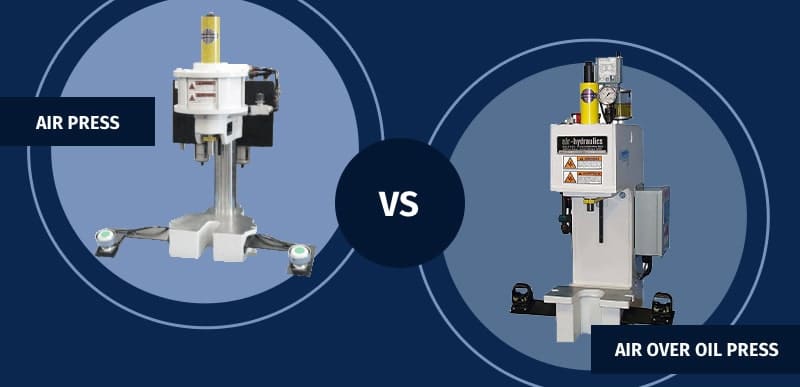
When it comes to tough assembly and metalforming jobs, a great factory press is an essential tool. But, there are many different types of presses to choose from. Two of the more affordable and easily usable types of industrial presses are air presses (AKA pneumatic presses) and air over oil presses (AKA hydropneumatic presses). So, what’s the difference between an air press vs an air over oil press?

Air Press vs Air Over Oil Press: What’s the Difference?

What is an Air Press?

An air press and an air over oil press are similar, but there are some important differences. An air press, or pneumatic press, uses compressed air in a series of cylinders to create force. The compressed gas contained in the cylinder can be regular air, mostly nitrogen and oxygen, or compressed nitrogen. When the air is compressed further in the cylinder, it creates pressure anywhere between 10psi and 5,000psi, which can then be used for a wide variety of assembly applications, riveting, punching, forming and other jobs.

What is an Air Over Oil Press?

An air over oil press, or hydropneumatic press, uses hydraulic and pneumatic technology to create force. This system uses compressed air to drive a piston that compresses hydraulic fluid. These technologies combined can create even more force than a pneumatic press, and can create force comparable to a full hydraulic press.

Air Press vs Air Over Oil Press: How Are They Similar?

Air presses and air over oil presses are similar in many ways. Both use pneumatic technology to create force. They also operate in similar ways, and have similar safety mechanisms and features. An air press and an air over oil press both require similar power needs, and have similar maintenance schedules. Compared to a purely hydraulic press, the air press and air over oil press also have less intense maintenance schedules.

Comparing an air press vs air over oil press, there are a few similarities:

  • Both use compressed air to generate force
  • Similar maintenance schedules
  • Similar power requirements
  • Similar safety mechanisms
  • Similar operation

Air Press Vs Air Over Oil Press: How Are They Different?

Though there are many similarities, there are also several important differences between an air press and an air over oil press. Since it uses hydraulic technology combined with compressed air, the air over oil press can exert more maximum pressure than a purely pneumatic press. An air press can exert between 150 and 5,000 lbs (2.5 tons) of force, while an air over oil press can exert between 2.5 and 50 tons of force. For this reason, an air press and an air over oil press are each ideal for different jobs and applications. An air press may be used for light applications like assembly, riveting, punching, staking, stamping, crimping, and similar tasks. An air over oil press may be used for heavier applications like bushing and bearing insertion, stud insertion, broaching, swaging, trimming, notching, and similar tasks.

Browse information and recommended presses by Industrial Press Application >

Another important difference between an air press vs an air over oil press is the costs associated with each. While they have similar maintenance schedules and costs to maintain, an air over oil press can exert more force and costs more to purchase. However, an air over oil press is generally more affordable than a purely hydraulic press. Finally, an air over oil press will be slightly larger and take up more space in your shop than an air press.

Comparing an air press vs air over oil press, there are a number of important differences:

  • An air over oil press can exert more maximum force than an air press
  • Each press is ideal for different jobs
  • An air over oil press costs more to purchase than an air press
  • An air over oil press has a larger footprint than an air press

Both an air press and an air over oil press have similarities as well as important differences. Which one is right for your shop will depend on your primary application, your budget, your shop layout, and more. If you’re unsure which type of press is right for you, contact us. We can help you find the right fit for your needs.