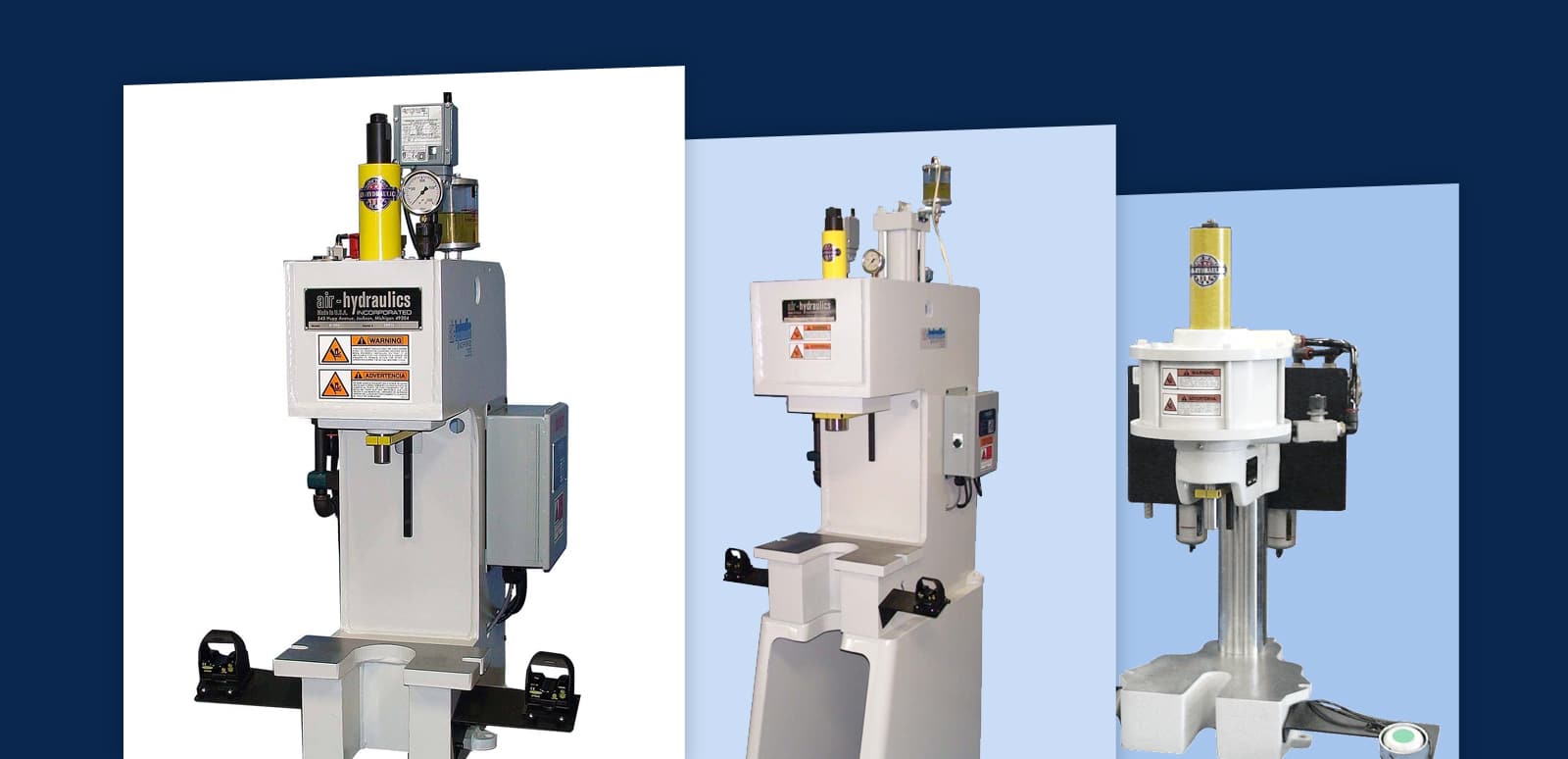

Benchtop hydraulic presses are a versatile and space-efficient solution for many manufacturing and assembly applications. They can be used in small workshops or larger industrial settings, providing a range of benefits. If you’re considering a new industrial or assembly press for your shop or factory, but you’re unsure about how to fit the press into your workplace, a benchtop hydraulic press might be ideal. Let’s take a closer look at some advantages of benchtop hydraulic presses.
Hydropneumatic vs Hydraulic Benchtop Presses
Before we discuss the advantages of a benchtop hydraulic press, it’s important to remember there are a variety of different options when it comes to benchtop presses, including pneumatic, manual, hydropneumatic, and more. Each of these presses has different advantages and disadvantages, depending on what you’re looking for.
For those seeking a cost-effective and energy-efficient alternative to traditional hydraulic benchtop presses, hydropneumatic (air-over-oil) presses provide a number of additional advantages. These presses use shop air to generate power, which reduces energy consumption while still delivering comparable force levels. Hydropneumatic presses also require less maintenance than purely hydraulic models, as they have fewer complex components and operate more efficiently. Their ability to combine the precision and power of hydraulic systems with the efficiency of pneumatic operation makes them an excellent choice for businesses looking to optimize performance while minimizing operational costs.
Wondering about benchtop hydropneumatic presses?
Contact us >>
7 Advantages of a Benchtop Hydraulic Press
Let’s take a closer look at the advantages of a benchtop hydraulic press compared to standing presses and other, larger models.
1. Ideal for Small Workshops and Limited Spaces
One of the primary advantages of benchtop hydraulic presses is their compact size. Unlike larger models, benchtop presses do not require dedicated floor space, making them an excellent choice for small workshops, tight work spaces, and laboratories. Their smaller footprint allows manufacturers to maximize workspace efficiency without sacrificing performance.
2. Multiple Functions for Various Applications
Benchtop hydraulic presses are designed for a wide range of applications, including metal forming, assembly, stamping, punching, and more. Their adaptability makes them suitable for a variety of industries, including automotive, aerospace, electronics, and general manufacturing. With a benchtop hydraulic press, you’ll have a versatile tool at your disposal, capable of handling multiple tasks with precision and reliability.
3. Customizable Power Levels and Features
Benchtop hydraulic presses are available with various power levels, ensuring that users can select a model tailored to their specific needs. Whether a low or medium-force press for delicate assembly work or a high-force model for heavy-duty applications, you can find the right benchtop press to suit your needs. Many models can also be equipped with optional features such as ergonomic options for easier operation, force and distance monitoring or servo control, adjustable stroke lengths, and more.
4. Cost-Effective Solution
Compared to larger industrial hydraulic presses, benchtop models are generally more affordable, making them an attractive option for both low and high production manufacturing and even starting operations. Despite their lower cost, these presses still deliver high levels of precision and force, ensuring quality results without the expense of larger equipment.
5. User-Friendly Operation
Benchtop hydraulic presses are designed for easy use, often featuring simple controls that make them accessible to operators of all skill levels. Many models come with intuitive controls, making setup and operation straightforward. This ease of use can reduce training time and improve productivity for manufacturers of all kinds.
6. Enhanced Portability and Flexibility
Since benchtop hydraulic presses are smaller and lighter than their floor-standing counterparts, they can be moved or repositioned as needed. This flexibility is especially beneficial for workshops that need to reconfigure their workspace frequently or those that require mobile solutions for different production tasks.
7. Scalability and Automation
Benchtop hydraulic presses can be equipped with a range of automation options to streamline production, such as programmable controls, sensors, and integration with material handling systems. Their modular design allows them to scale with growing manufacturing demands, making it easy to adapt from low-volume prototyping to high-volume production. These features help manufacturers optimize efficiency, reduce labor requirements, and tailor the press to fit seamlessly into their specific process.
 A benchtop hydraulic press is a practical and versatile investment for any workshop or manufacturing facility. Whether you’re working on small-scale assembly tasks or precision metal forming, a benchtop hydraulic press can help you achieve high-quality results while optimizing your workspace. If you have questions about benchtop hydraulic presses or other types of factory presses, contact us. We can provide you with a variety of information to make your press choice easier.

 These are physical barriers that prevent access to the press’s moving parts. They are typically bolted or welded in place.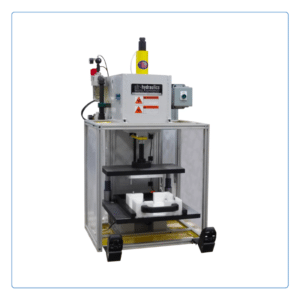


 C-Frame Hydraulic Press
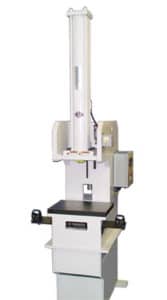 A hydropneumatic press is a great alternative to a purely hydraulic press for manufacturing and assembly. The Air Hydraulics line of