What is a Hi/Lo Hydropneumatic Cylinder? 

Getting the right balance of force, speed and efficiency with your industrial press equipment is essential for consistent, repeatable and sustainable manufacturing or assembly operations. Presses equipped with a hi/lo hydropneumatic cylinder may be the perfect solution to your application needs, but to find out, it’s key to understand these cylinders and what makes them ideal for many production applications. Let’s take a closer look at what a hi/lo hydropneumatic cylinder is, what it does, and what benefits it can extend to your industrial press system.

What is a Hi/Lo Hydropneumatic Cylinder?

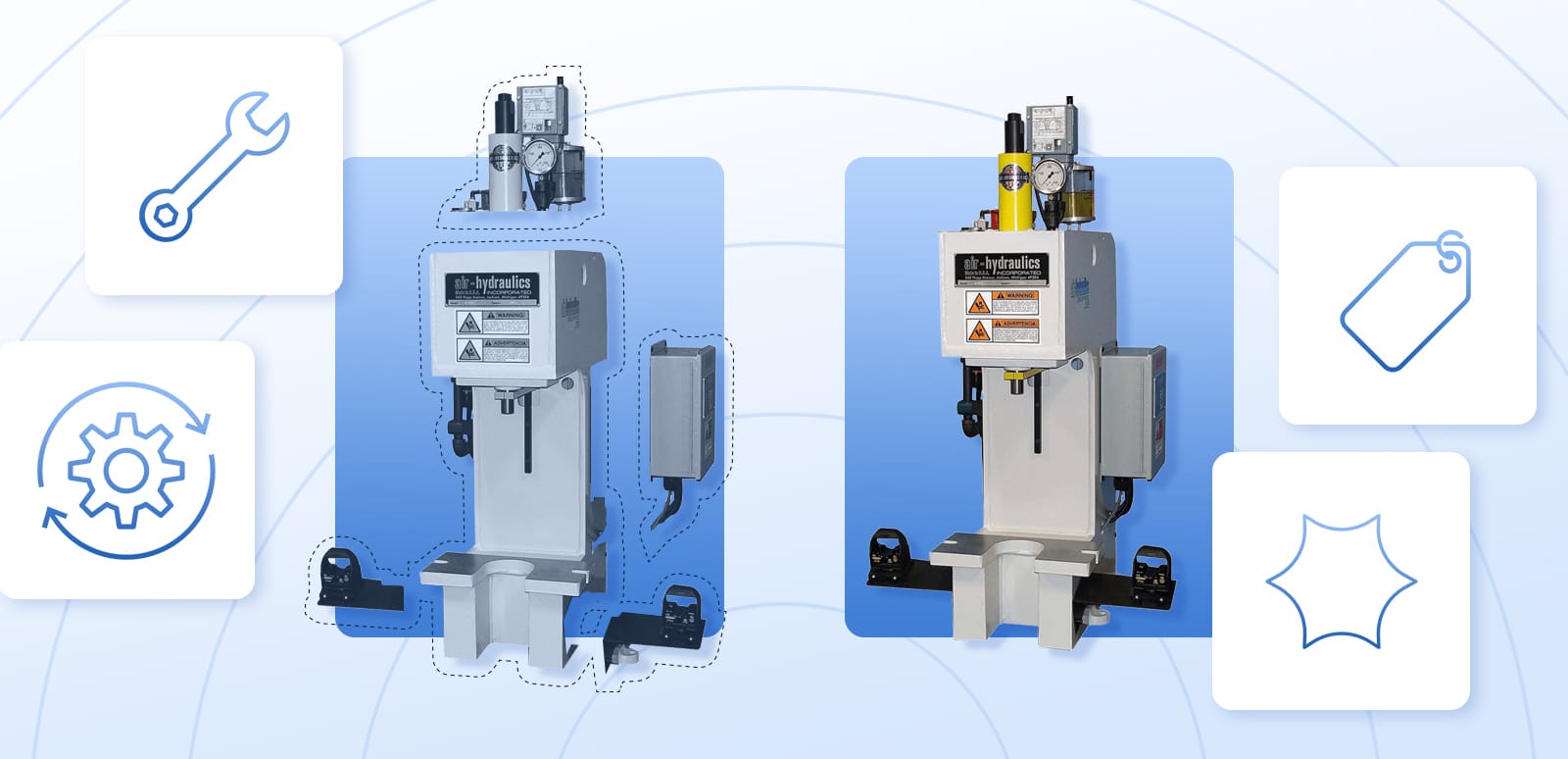
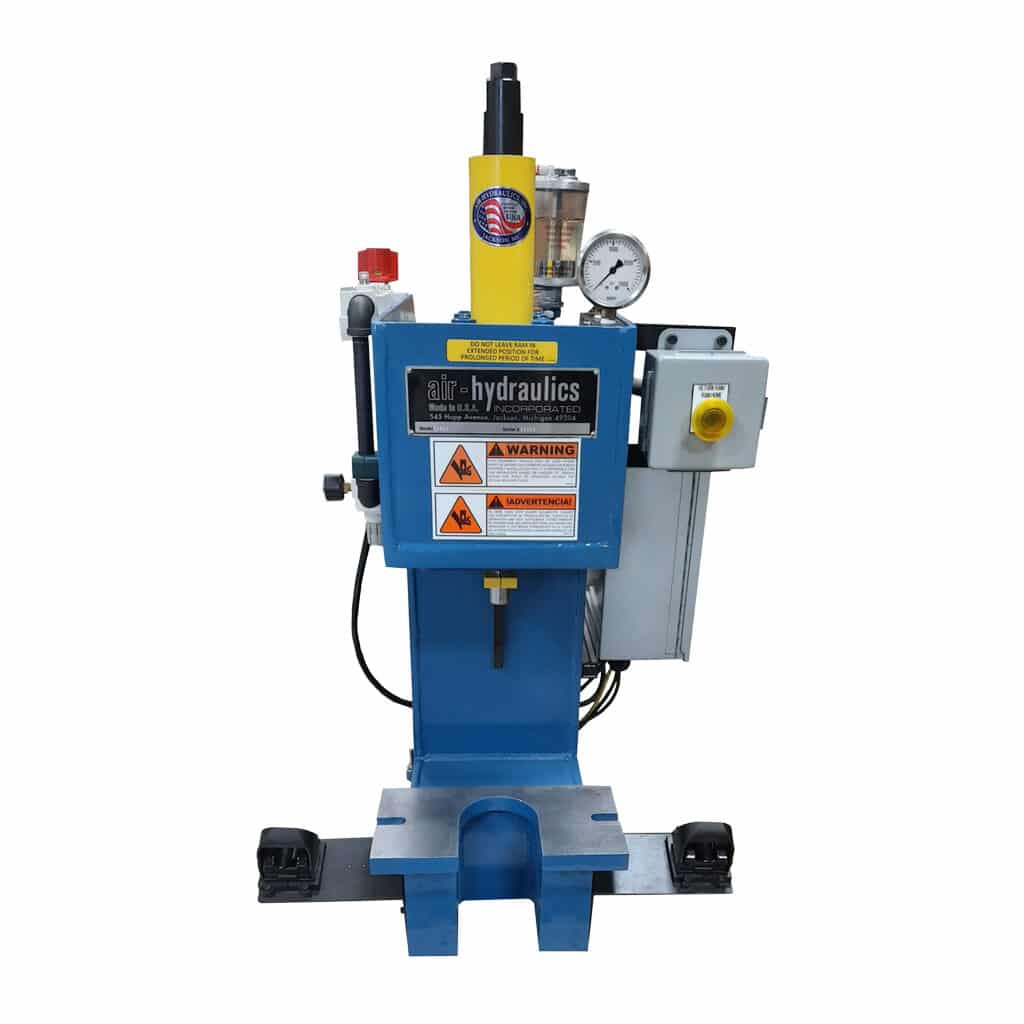
A hi/lo hydropneumatic cylinder relies on compressed air as the power source and uses self-contained hydraulic fluid to produce hydraulic intensified pressure. It may also be called an intensifier cylinder, air-over-oil cylinder, or simply a hydropneumatic cylinder.

View details and specifications on our AH-Series 4 ton to 50 ton Hi/Lo Hydropneumatic Intensifying Cylinders >

How Does a Hi/Lo Hydropneumatic Cylinder Work?
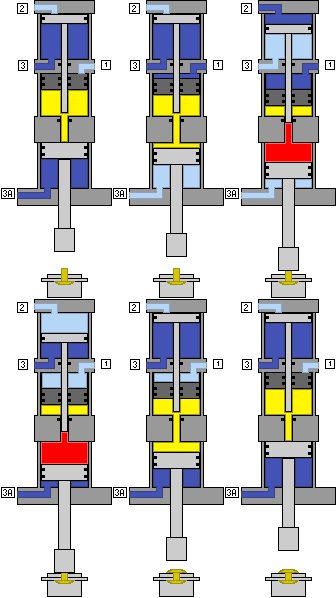
Hilo Press AnimationThe hi/lo hydropneumatic cylinder uses compressed air and hydraulic oil to multiply the force behind the press. In general, the cylinder goes through these steps:

  1. A pneumatic valve is energized allowing air into the reservoir section of the cylinder. The reservoir piston extends, displacing hydraulic oil on the top side of the working piston, quickly advancing the cylinder rod at low force.
  2. Once the cylinder rod meets resistance or a certain distance, a secondary valve is energized allowing air to enter the high-pressure section of the cylinder, advancing the high-pressure piston and rod into the reservoir section, thus intensifying the hydraulic oil and producing a high-pressure power stroke.
  3. The cylinder rod retracts once both valves are de-energized, allowing air to return the reservoir piston and high-pressure piston to their full retract position.
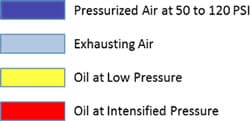
Animation Key

Benefits of a Hi/Lo Hydropneumatic Cylinder

A hi/lo hydropneumatic cylinder offers a number of benefits and is suitable for many different applications. Let’s take a look at a few of the benefits of the cylinder, and explore why manufacturers use this device to improve the force and efficiency of their presses.

Increased / Intensified Force

One of the biggest benefits of a hi/lo hydropneumatic cylinder is its ability to amplify the force of a pneumatically powered press, delivering higher force with efficiency. For example, a 5-inch bore pneumatic cylinder produces less than 1 ton of force at 100 psi, but a 5-inch bore hydropneumatic cylinder can deliver force to up to 20 tons. This is ideal for factories that may be expanding into new production or assembly operations, working with new materials, or seeking to increase efficiency of existing operations.

Flexible Power Stroke

The hi/lo cylinder can be sequenced into the power stroke at any point throughout the total stroke of the cylinder. You can decide when the hi/lo cylinder integrates into the power stroke, and decide which device is best to activate the hi/lo cylinder. This includes a time delay, external proximity switch, or a threshold sensor installed directly into the cylinder. This gives you flexible control over the power stroke and allows you to integrate the cylinder into your machine in the way that works best for your control system.

Uses Less Air

The hi/lo hydropneumatic cylinder also allows the machine to exert more force, while using less air. Since it uses hydraulic oil and compressed air together to power the cylinder, it requires less air overall compared to a purely pneumatic press or even full stroke hydropneumatic presses like our C-series Air Hydraulic Presses.

Operates Faster

The hi/lo hydropneumatic cylinder allows for faster operation, which means more efficient production. With the ability to generate the power stroke anywhere within the overall stroke of the cylinder, you can speed up your overall production process.

Self-Contained

The hi/lo hydropneumatic cylinder is completely self-contained, so there is no need for any additional hydraulic reservoirs or tanks. This makes for a smaller footprint and makes these cylinders easier to integrate into existing or future machine design.


Interested in a Hi/Lo Hydropneumatic Press for Your Production?

Our AH-Series Hydropneumatic Presses may be the perfect solution to applications requiring between 4 tons and 50 tons of force.

View Press Models and Information >


A hi/lo hydropneumatic cylinder can be a powerful tool in your factory. These cylinders can augment many existing presses, or provide extra power for new presses. If you have questions about hydropneumatic cylinders, hydropneumatic presses, or other types of presses, contact us. We can help you find the right press for your needs and applications.

How to Select a Press for Future Expansion

select a press for future expansion

If you’re looking for a new press, it’s important to think about what you need now as well as what you’ll need in the future. Buying a press that meets your immediate needs, but limits your expansion, can cause problems in the future. To select a press for future expansion, there are a few important factors to consider. Let’s take a closer look.

How to Select a Press for Future Expansion

A press that supports the future expansion of your business will allow you to take on different projects, work with different materials, and/or produce higher volumes than you currently do. Looking for particular features in your new press can help you expand confidently in the future.

Adaptable to Different Applications

One of the most important aspects to look for is adaptability. When your press can take on different applications, you’ll be able to work with different clients and complete different tasks. When your press is designed to perform only one job and struggles to move between different tasks, it can limit the work that you can take on. Consider how your press might perform multiple jobs, as needed, such as different stamping and shearing operations, or different metal insertion, riveting, or staking operations, among others.

Adjustable with Different Tooling

The tooling your press is able to work with plays a big role in the jobs and tasks that it can take on. When your press can be adjusted to suit different types of tooling, you’ll be able to work with simple or complex jobs. In some cases, you may need to use different tooling for different jobs, while other jobs may require different tooling to accomplish different tasks working on the same product, part, or component.

Data Collection Enabled

Features that enable data collection can help you reduce defects, improve productivity, and improve quality. Some jobs require higher levels of precision than others, and data collection tools like force and distance monitoring will allow you to meet the needs of jobs with narrow tolerances. These tools can show when the press performs the job with the appropriate level of force and distance, and when the operation is outside of acceptable limits. This, in turn, will help to prevent defects, even when they are not readily visible.

Automation

Automation can increase productivity substantially. This can be especially helpful for high-volume, repetitive jobs. As you plan for future expansion, think about how automation can enhance efficiency and productivity in your manufacturing processes. Look for presses that offer automation capabilities, such as programmable controls, robotic integration, or conveyor systems. Investing in a press with built-in automation features can streamline operations and position your facility for future growth and competitiveness.

Even simple automation, like rotary index tables, for example, can enable much faster movement between different jobs, and increase efficiency for complex parts or products.

Space and Layout

Before investing in a press for future expansion, assess your facility’s space constraints and layout considerations. Ensure that the press you choose fits within your available floor space and can be integrated seamlessly into your production workflow. Consider factors such as access for maintenance, material handling requirements, and safety considerations.

Force Output

Many people choose a press with more power and force than they need. Outsizing your press significantly can result in wasted energy and increased energy costs. However, choosing a press with room to grow will allow you to plan for the future. Consider what jobs you might take on in years to come, and choose a press with enough force to carry them out. Keep in mind that many air-over-oil presses can produce as much as 50 tons of force or more, which means you can reduce the maintenance and overall ownership costs associated with a hydraulic press by choosing a hydropneumatic model.

Selecting a press that supports future expansion will allow you to take on more jobs, work with more clients, and produce more products overall. If you have questions about press performance, force, operation, features, or something else, we can help. Contact us to learn more about pneumatic, hydropneumatic, or hydraulic presses, as well as many features and tools to improve productivity.

A Simple, Effective Safety Feature for Riveting, Staking and Resistance Welding Machines

safety features for riveting, welding, staking

Safe and secure working environments are essential for productivity and efficiency. When workers have to put extra effort into maintaining their safety, they are likely taking time, energy, and focus away from doing their best work. If an operator of a high pressure machine gets their fingers pinched, this is an even bigger concern. Installing the right equipment to protect riveters, welders, and other manufacturing workers can help reduce workplace incidents and improve productivity.

The question then becomes, how do manufacturers select the right safety equipment to adequately protect operators? Safety devices that are too difficult to use could slow down operations, or worse, go unused. The best safety features are simple, with minimal instructions for use and fit into the intended process smoothly, without interrupting production.

Solution: Probe Sensing Devices

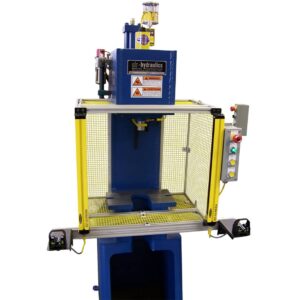
Probe sensing devices are ideal safety features for simple, yet effective protection for riveting and resistance welding machines. Our Protectoswitch is a probe sensing device that protects operators from pinch point accidents while operating machines such as riveters, punches, eyeletters, stakers, and spot welders.

When the operator initiates an actuator or foot switch to activate the machine, the Protectoswitch momentarily intercepts the start signal and automatically drops a probe around the work area. If an obstruction is sensed, the machine will not fire. Once the obstruction is removed and the work area is clear, the Protectoswitch probe falls to its full stroke, closing an actuating switch to fire the machine.

These simple devices offer a cost-effective way to increase operator confidence and productivity, improve safety, and reduce time lost on the job.

Check out the Black & Webster Protectoswitch, available in electric, pneumatic or electric-pneumatic models – simple, effective devices to keep workers safe. 

Learn more >

Protectoswitch

Why Choose the Protectoswitch?

Simple Operation

This safety device doesn’t come with a long list of instructions that operators need to follow to ensure it works properly. Once it’s set up, the device automatically engages with the machinery, stopping the operation of the device if an obstruction is detected and continuing forward once the obstacle is removed, without requiring operators to reset or restart the machine.

Three Power Choices

The Protectoswitch comes as a fully pneumatic powered, electrically powered, or a combination of electric and pneumatic powered device to fit seamlessly with your production equipment.

Maintenance Free Operation

Once configured to the upper and lower tooling of the intended machinery, the Protectoswitch can offer years of maintenance free safety.*

The right safety features are essential to protect workers operating riveting, staking or welding machines, and other presses and impact hammers . Assessing your facility, determining the safety needs of your equipment, and providing the right instruction to all workers will help to keep your facility safe. If your factory presses are in need of safety upgrades, Air-Hydraulics may be able to help. Contact us today to learn more about safety features and upgrades for your manufacturing and assembly equipment.

Can Your Factory Press be Refurbished or Upgraded?

can your factory press be refurbished or upgraded

If your factory press isn’t performing up to your standards or you need to retool your press for a new operation, you might wonder if it can be refurbished or upgraded, or if it’s time for a replacement. It’s an important question that requires careful attention. Let’s take a look at a few situations and considerations for refurbishment, as well as when it’s time to get a new press.

Can Your Factory Press be Refurbished?

In many cases, while the idea of repairing or upgrading an existing press may seem like an opportunity to save on investment costs, it would actually end up costing more than it would to simply start fresh with new equipment. There are a few scenarios where upgrading a press will indeed be a cost-effective option, but there are a few important factors and limitations to consider.

Limited Refurbishment Options

First, refurbishment and upgrades are generally only performed by the original press manufacturer. Press manufacturers generally won’t take on the risk associated with reworking or upgrading another manufacturer’s work. Differing parts and standards make this process particularly difficult, and the results vary. Press manufacturers that maintain a high standard of workmanship will maintain and upgrade their own work, but won’t take chances with other manufacturers.

Situations for Refurbishment

A few situations are ideal for press refurbishment. You can still get a few more years out of your press if you’ve encountered these obstacles. Your OEM should be able to provide these upgrades and refurbishment options:

  • Safety features: If your press is missing some critical safety features, refurbishment can provide improvements. Your existing press may be eligible for upgraded safety features to increase factory safety and/or bring your press up-to-code.
  • Repairs: Regular press maintenance will help keep your press in full working order, but some parts will inevitably still wear down. Your OEM can provide parts for repair, or replace things like valves and cylinder seals, cylinders, and other wear parts. If you notice your press losing force or efficiency, replacing these wear parts can help.
  • Updated controls: If the machine’s controls have become outdated, an upgrade refurbishment may help. Updating the control system can help the machine integrate with your factory, perform more efficiently, and work faster.

We gave 8 of our machines new life with rebuilt cylinders, new valves, updated safety features, and updated controls

See the case study >

Refurbishment Cost Analysis

A cost analysis will be important as you debate between refurbishment and replacement. It’s important to consider all of the costs incurred by refurbishment, and how long you expect your equipment to last after it’s been repaired or upgraded. If your machine is missing important features and components, it’s also important to consider the opportunity costs of operating without these tools.

  • Shipping or delivery: To refurbish your equipment, you’ll need to get your press to your OEM and back, which can be costly.
  • Remaining life: How much life does your press have, even if it is successfully refurbished? Does it make financial sense to invest in the machine with the remaining lifespan for your production use?
  • Opportunity costs: Consider energy costs and efficiency losses of using the outdated press. If your press is holding back efficiency gains of your more modern equipment, it can add invisible expenses that might be harder to gauge.
  • Most presses that are eligible for refurbishment will also need to have their controls updated to meet current safety standards by default. This cost will be included in the overall refurbishment package and could make refurbishment less cost effective than an investment in all new machinery.

Situations Requiring New Presses

In some situations, it will make more sense to replace your outdated press equipment with a new press. In these situations, it will be difficult and costly to upgrade your press to bring it up to modern standards. It may be impossible to make these upgrades, or it generally won’t make financial sense.

  • Additional power: If your press isn’t providing enough force to successfully complete the job or jobs it requires, you’ll need a replacement press. To completely change the force capabilities of the press would require a complete reconstruction, and it will make more sense to purchase a modern press with the latest technology.
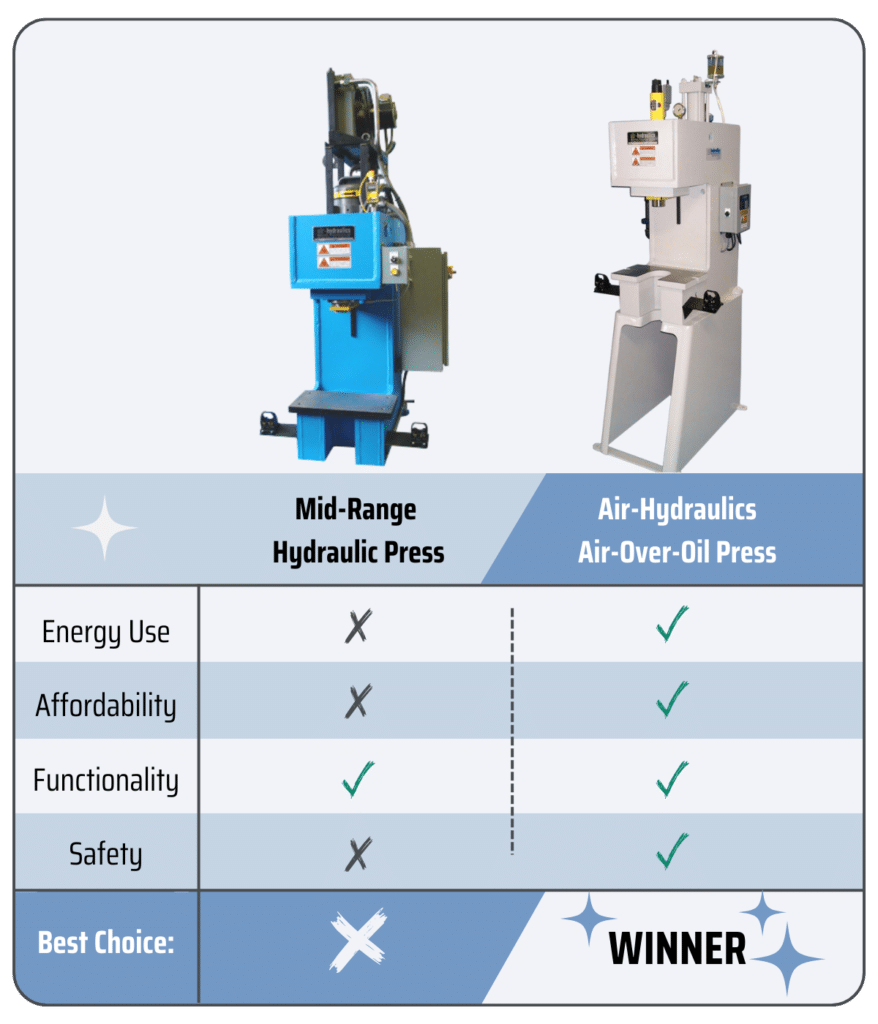
  • Energy efficiency: Modern presses use energy more efficiently than older presses. Modernization can improve energy efficiency by as much as 35% for some presses. Utilizing an air-over-oil press instead of a purely hydraulic press, for example, can also reduce energy use significantly and make your factory a bit greener.

New Press Technology: Technology upgrades like force and distance monitoring and other data collecting equipment, PLC controls, or automations can help to reduce defects, improve production speed, reduce costs, and more. However, older presses might not be able to integrate with this technology, and a new press with this technology can give your factory significant modern advantages.

Need to upgrade a hydraulic press?

Take a look at an energy efficient alternative press that’s customizable for modern manufacturing, including data collection, automations and/or future expansion.

View our 2.5 Ton – 15 Ton C-Series Air-Over-Oil Presses >

C-300 Press with Two-Hand Initiated Auto Cycle

If you aren’t sure about refurbishment vs replacement when it comes to an Air-Hydraulics Presses, contact us. Tell us what you need from your equipment and how it currently functions and we can give you options for replacement or refurbishment.

13 Ways to Reduce Waste in Production and Assembly

reduce waste in production and assembly

Reducing waste in production and assembly can help you reduce costs, improve efficiency, and improve environmental sustainability. These strategies vary widely from inventory management to manufacturing techniques to asset maintenance and more. Let’s take a closer look at a few effective strategies to help manufacturers reduce waste in production and assembly.

13 Ways to Reduce Waste in Production and Assembly

1. Conduct a Waste Audit

Before implementing any changes, a comprehensive waste audit will help you identify areas of waste generation and inefficiency in production and assembly processes. Your waste audit might include a variety of different aspects, including materials, energy usage, resource consumption and more. With this audit completed, you’ll have a list of inefficiencies to address and prioritize.

2. Embrace Lean Manufacturing Principles

Lean manufacturing focuses on eliminating waste and maximizing value through continuous improvement and process optimization. Adopting lean principles such as 5S (Sort, Set in order, Shine, Standardize, Sustain), just-in-time production, and value stream mapping can help streamline operations and reduce waste.

3. Equipment Upgrades

As technology advances, manufacturing equipment becomes more energy-efficient. As you might expect, older equipment tends to waste energy. This might occur due to maintenance issues such as air pressure loss in pneumatic presses, or simply using old, oversized presses that expend more energy than necessary. Upgrading your equipment can help you reduce waste in production significantly.

The Best New Technology for Factory Presses >

4. Identify Bottlenecks

Bottlenecks in your production process inevitably slow things down, and also cause waste to accumulate. Bottlenecks can cause machines to run idle while waiting for another machine to finish. Coordinating your machines’ run time can help reduce downtime and idle time overall, thereby also reducing energy waste and wasted time.

5. Adding Automation

Automation can help streamline some processes and use data to coordinate processes more efficiently. Automated upgrades can help move parts from one machine to another, coordinate sequential processes, reduce defects, and much more.

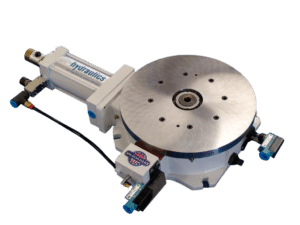
Simple automation like part indexing can help streamline production and assembly processes. Utilizing a rotary indexing table in your pressing applications also reduces the potential for human error in part positioning, decreasing the potential for defects dramatically.

View our 7-15” heavy duty, low profile Industrial Rotary Indexing Tables >

6. Optimize Inventory Management

Overstocking of materials and components can lead to unnecessary waste and tie up valuable resources. Implement inventory management systems to track inventory levels accurately and avoid excess stock. Just-in-time (JIT) inventory practices can help minimize waste by ensuring that materials are delivered precisely when needed for production.

7. Reduce Packaging Waste

Huge amounts of waste come from packaging. You can minimize the packaging waste from your business by using eco-friendly and recyclable materials, optimizing packaging design to reduce material usage, and implementing efficient packaging processes. You might also consider alternatives such as reusable packaging, biodegradable materials, and lightweight packaging solutions to minimize environmental impact. Working with material suppliers who are also eco-conscious can help reduce the packaging waste that reaches your business as well.

8. Implement Sustainable Material Practices

Choose sustainable materials and components whenever possible, prioritizing those with recycled content or renewable sources. Design products for disassembly and recycling to facilitate end-of-life disposal and minimize waste generation throughout the product lifecycle.

9. Invest in Energy Efficiency

Energy efficiency is one of the best ways to reduce waste in production and assembly. You can improve energy efficiency in your operations by optimizing manufacturing processes and/or implementing energy-saving technologies and equipment. Reduce energy consumption through measures such as using energy-efficient lighting, optimizing HVAC systems, and investing in renewable energy sources.

For processes that rely on hydraulic press equipment, upgrading to an energy efficient hydropneumatic press could cut production costs.

Take a look at our proprietary C-series Air-Over-Oil Press, for instance. This powerhouse machine is an energy saving alternative to a full hydraulic press that delivers full force throughout the stroke for heavier applications.

View C-Series Air-Over-Oil Models >

alternative to a 10-ton hydraulic press

10. Train and Educate Employees

Employee engagement and training are crucial for successful waste reduction initiatives. Provide training on waste reduction techniques, sustainability practices, and the importance of minimizing waste. Encourage employee involvement in identifying opportunities for improvement and implementing waste reduction measures.

11. Collaborate with Suppliers and Partners

There are many ways you can reduce waste in your own operations, but you will have more options if you work with other waste-reducing partners. Work collaboratively with suppliers and partners to promote sustainable practices throughout the supply chain. Encourage suppliers to adopt eco-friendly packaging, reduce waste in their manufacturing processes, and prioritize sustainable sourcing practices.

12. Monitor and Measure Progress

It’s difficult to know how successful you are in reducing waste unless you monitor your process and set goals. Establish key performance indicators (KPIs) to track progress and measure the effectiveness of waste reduction efforts. Regularly monitor waste generation, recycling rates, energy consumption, and other relevant metrics to identify areas for further improvement and celebrate successes.

13. Continuous Improvement

Waste reduction is an ongoing process that requires continuous monitoring, evaluation, and improvement. Encourage a culture of innovation and continuous improvement within the organization, where employees are empowered to identify opportunities for waste reduction and implement sustainable solutions.

By implementing these strategies and embracing a culture of sustainability, businesses can reduce waste in production and assembly processes, minimize environmental impact, and create long-term value for both the company and the planet.

5 Press Equipment Tools for Lean Manufacturing

Lean manufacturing aims to make processes more efficient and effective. To properly implement lean manufacturing and eliminate waste, you need the right information and tools. Let’s take a look at press equipment tools that can help you implement lean manufacturing for your production and make your factory or shop more efficient.

What is Lean Manufacturing?

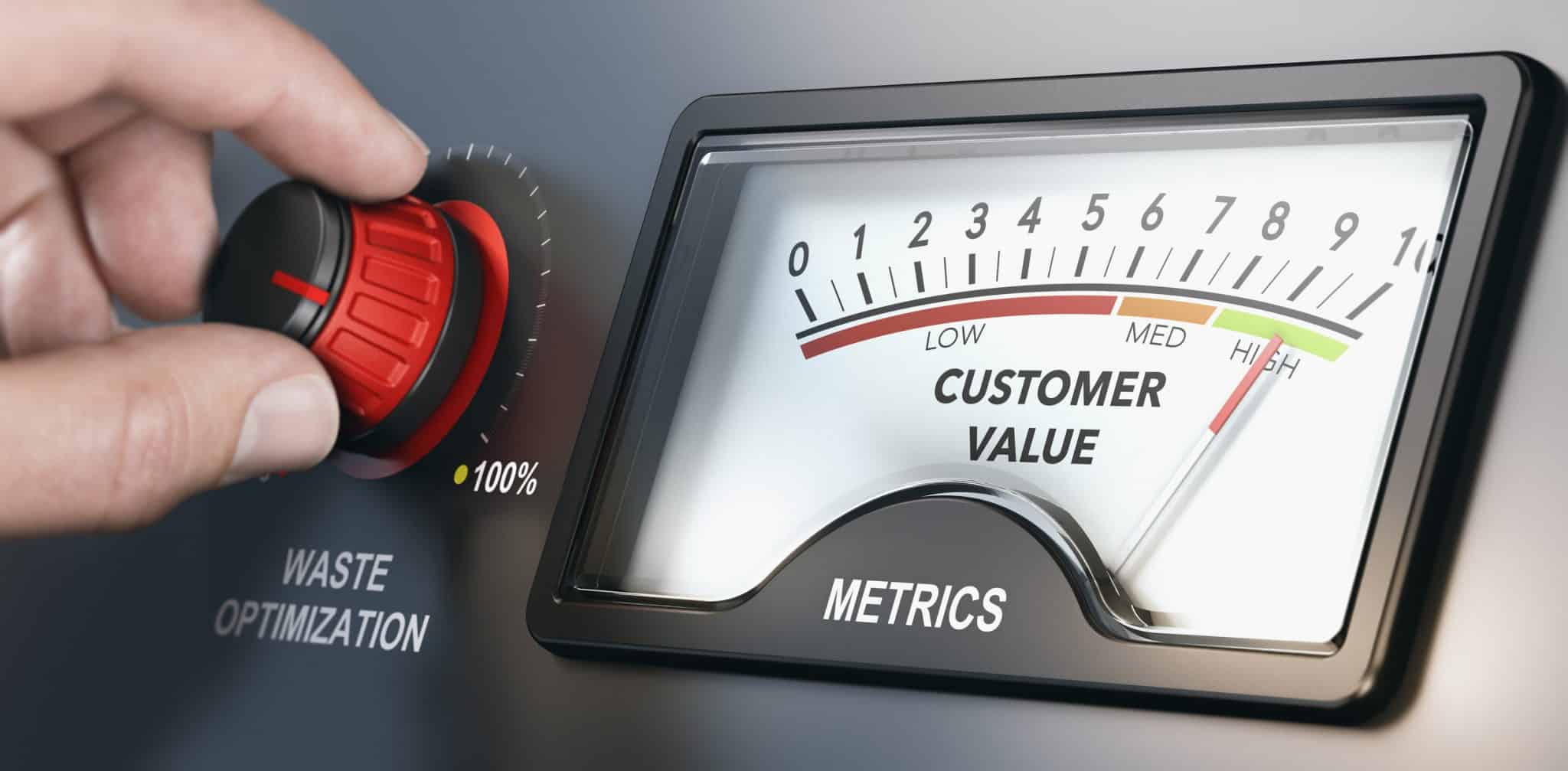
First of all, what is lean manufacturing? Lean manufacturing is a systematic approach focused on eliminating waste, improving efficiency, and optimizing processes to deliver more value. The core principles of Lean revolve around continuous improvement and minimizing resource use. By identifying and eliminating non-value-added activities, Lean aims to create a streamlined production environment that meets customer expectations with shorter lead times, improved quality, and enhanced reliability.

Lean manufacturing is mainly concerned with the following:

  • Waste: From excess materials to defective products and much more, waste can quickly eat into revenue. Reducing waste is an important part of Lean manufacturing.
  • Time: Working faster and reducing downtime is one of the most obvious ways to improve efficiency, and a priority in Lean manufacturing.
  • Quality: Improving a product’s durability or functionality, or reducing defects, is an important part of raising value in Lean manufacturing.
  • Cost: Reducing production costs, transportation costs, or overhead can help the company operate more efficiently, and pass along savings to customers.

What is Six Sigma?

Six Sigma is closely related to Lean manufacturing. Six Sigma is a data-driven methodology aimed at minimizing defects and variations in processes, ultimately leading to improved product quality and customer satisfaction. Combining statistical analysis with a focus on process improvement, Six Sigma seeks to achieve near-perfect performance by reducing process variations. By employing the DMAIC (Define, Measure, Analyze, Improve, Control) approach, organizations can identify and correct issues, ensuring that processes consistently meet requirements.

The right press improvements can support Lean manufacturing
Contact us to learn more about integrations and upgrades >

5 Press Equipment Tools for Lean Manufacturing

Lean manufacturing and Six Sigma process improvement is difficult to implement without tools and equipment. Let’s take a look at some key press equipment tools that can help you implement lean manufacturing.

1. Force and Distance Monitoring

Incorporating force and distance monitoring tools into press equipment is a key strategy for Lean manufacturing. These tools provide real-time data on the force applied and the distance traveled during press processes. By monitoring these parameters, manufacturers can identify irregularities, prevent defects, and optimize processes for enhanced efficiency. This data-driven approach allows for timely adjustments, reducing waste and ensuring that the final product aligns with customer expectations.

2. Vision Systems

Utilizing advanced camera equipment, such as the Insight Cognex Camera, is a transformative step in Lean manufacturing. These cameras offer high-resolution imaging for quality control, defect detection, and process monitoring. By capturing and analyzing visual data, manufacturers can identify and address issues promptly, ensuring that only products meeting quality standards reach the customer. The integration of sophisticated camera systems aligns with Lean principles, driving continuous improvement and minimizing defects in the production process.

Custom 2.5 Ton Force and Distance Monitoring Press Configured for Error-Proof Assembly

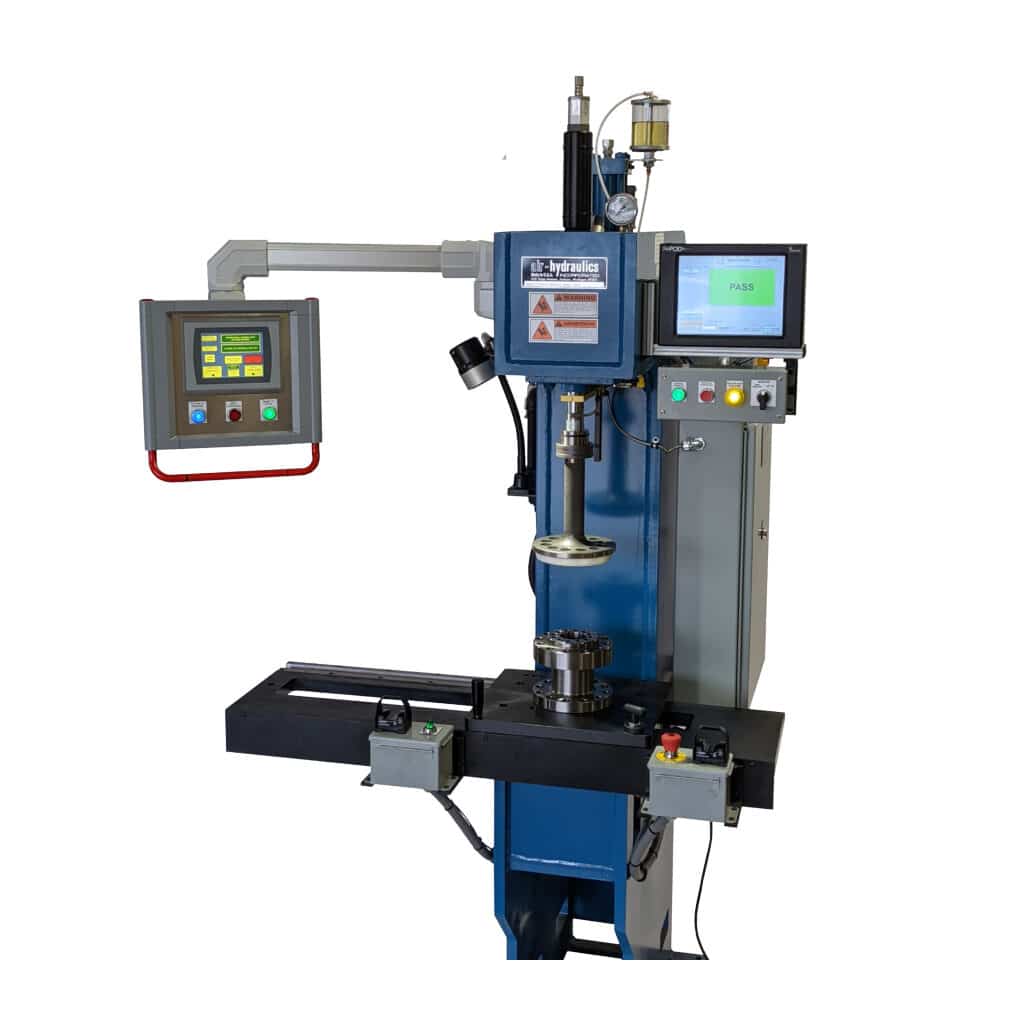
Take a look at this 2.5 ton force and distance monitoring air-over-oil press, customized with a Cognex Insight Vision Sensor and Allen Bradley PLC control system for an efficient, error proof assembly application.

View the Case Study

2.5 ton force and distancing monitoring press configured for error proof assembly

3. Rotary Index Tables

Rotary index tables play a pivotal role in Lean manufacturing by facilitating efficient and precise part positioning during various stages of production. These tables enable seamless transitions between different manufacturing steps, reducing downtime and optimizing the overall production process. By incorporating rotary index tables, manufacturers can achieve smoother workflows, provide shorter lead times, and improved operational efficiency, all contributing to meeting customer value requirements.

4. Automation

Integrating automation into press equipment is a cornerstone of Lean manufacturing. Automated systems enhance efficiency, reduce manual labor, and minimize errors, contributing to optimal processes. From robotic arms handling materials to automated control systems managing production, these advancements streamline operations, ultimately resulting in a higher-value operation and improved return on investment (ROI).

Custom All-In-One 10-Ton Press 

Check out this SIG series force and distance monitoring air-over-oil press, customized to perform a series of ten unique pressing operations to build out ten different subassemblies.

View the Case Study

10 Ton SIG 400

5. Jog Control / Press Fault Circuits

The incorporation of a jog control circuit (NP) or fault circuit (FI) on press equipment is an inexpensive and practical solution for Lean manufacturing. These control options confirm that the pressing operation was performed properly, preventing assembly of a non-conforming part. The jog circuit also enhances flexibility in the production process, aligning with Lean principles by empowering operators to quickly respond to changing requirements or set-up changes. This flexibility contributes to achieving optimal processes for productivity and efficiency, ultimately translating to a higher-value operation and improved profitability.

2.5 Ton C-Series Assembly Press with Custom Jog Circuit

This air-over-oil press was outfitted with a 3-position “Jog” circuit, which allows the operator the ability to stop the ram at any position in the downstroke by removing their hands from the finger switches.

View the Case Study

C Series 2 5 Ton Air Over Oil Press

The right press equipment tools for Lean manufacturing can improve your process time, reduce defects, improve quality, and more. If you’re interested in upgrades, additional features, or new press equipment to support Lean manufacturing, contact us today.

What to Look for in a Quality Press Manufacturer

Investing in the right press is crucial for seamless operations and high-quality output. Finding a high-quality press manufacturer can help protect your investment and make sure you have the right equipment for the job. Let’s take a look at the key factors to consider when choosing a press manufacturer.

9 Things to Look for in a Quality Press Manufacturer

1. Experience and Reputation

One of the most important things to look for in a quality press manufacturer is a proven track record in the industry. Look for manufacturers with years of experience and a positive reputation. Case studies and customer reviews can provide valuable insights into the manufacturer’s reliability and the satisfaction of their clients.Ask about the manufacturer’s previous projects and repeat customers. See if they can offer details beyond the press itself, like their continued service and after-sale support.

2. Compliance with Industry Standards

Adherence to industry standards and regulations is non-negotiable. Ensure that the press manufacturer follows safety guidelines and that they are ISO certified. This not only guarantees the safety of your workforce but also ensures that your investment in high-quality equipment is safe.


Air-Hydraulics Quality System. Certified ISO 9001:2015 >


3. Customization Options

Every industrial operation is unique, and a one-size-fits-all approach isn’t effective for many businesses. A reputable press manufacturer should offer customization options to meet the specific needs of your business. This flexibility ensures that the press aligns seamlessly with your production requirements. Take a look at the press manufacturer’s available add-on and customization options , such as safety features, or data monitoring tools like force monitoring, distance monitoring, or both force and distance monitoring combined. You might also look for customization options that vary the force output of the press, like an air-over-oil intensifier.

4. Build Quality and Materials

The durability and reliability of a press depend on the quality of its construction. Ask about the materials used in the press’s construction, and ensure they meet industry standards. Consider the type of press as well, and the maintenance it requires. A robust and well-built press not only performs better and lasts longer, but also requires less maintenance, reducing downtime and overall operational costs.

5. Performance and Efficiency

Efficiency is a key consideration in any industrial setting. Evaluate the performance metrics of the presses offered by the manufacturer. This includes speed, precision, and energy efficiency. A quality press should enhance productivity while maintaining high standards of accuracy.

6. Single-Source Parts Stocking

Industrial presses, like most industrial machines, require regular maintenance to keep working at their highest level. Waiting on parts for maintenance or repairs can quickly create unscheduled downtime and eat into revenue. Look for a single-source manufacturer who stocks parts in-house, and can provide repair parts and maintenance without long lead times.

7. Technological Expertise

Technology moves fast, and press technology is no exception. To get the best press, as well as one that will meet your needs well into the future, technological expertise is essential. A quality press manufacturer stays up-to-date on the latest advancements in press technology. Take a look at the press manufacturer’s technological offerings, including their product offerings and the technology included in their case studies. This might include energy-saving technologies like pressure regulators, proportional regulator, or variable frequency drives. Or, it might include data-gathering and monitoring tools, or automation technology.

8. Different Press Options

air over oil / hydropneumatic, air press and hydraulic press options from Air-Hydraulics Inc.

There are many different types of presses, and being able to choose between these different types will help you find the perfect press for your needs. Hydraulic presses are often the go-to choice for many operations, however alternative presses, such as pneumatic presses or air-over-oil presses can provide the same force while lowering costs and maintenance needs. Consider when you need a hydraulic press, and when another type of press can provide faster ROI, easier operation, and lower investment costs.

Air-Hydraulics offers different types and models of industrial presses for production and assembly, all which can be customized to your specific requirements >

9. After-Sales Support and Service

After-sale support is just as important to look for in a quality press manufacturer as high-quality craftsmanship. A reliable press manufacturer goes beyond the sale; they provide excellent after-sales support. Inquire about the availability of maintenance services, technical support, and the manufacturer’s response time to address any issues. A prompt and efficient after-sales service ensures minimal disruptions to your operations.

AHI is a single-source manufacturer who offers lifelong support on our products. See how we gave 8 older presses new functionality, safety features, and speed upgrades to improve our client’s manufacturing performance.

View The Case Study


Choosing a quality press manufacturer is a strategic decision that directly impacts the success of your industrial operations. By considering factors such as experience, technological expertise, customization options, build quality, and more, you can make an informed choice that aligns with your business goals. To learn more about press options, construction, customization and more at Air-Hydraulics Incorporated, contact us today.

Top Equipment Upgrades for Industrial Presses in 2024

Industrial presses continue to play a vital role in manufacturing. As new technologies expand across manufacturing and assembly, the abilities of presses continue to expand as well. Looking forward, we can make a few predictions for the top equipment upgrades for industrial presses in 2024.

Top Equipment Upgrades for Industrial Presses in 2024

There are a wide variety of equipment upgrades possible for industrial and factory presses. Which ones are right for you will depend on your industry and goals. In this blog post, we’ll explore a few equipment upgrades which are likely to be most impactful or common, and why this might be so.

Our prediction is that 2024 will see the following upgrades across manufacturing industries and sectors:

  • Energy-Efficient Presses
  • Added Automations
  • Smart/Data Monitoring Technology

Let’s dive into each of these and see what kind of equipment that might entail and why these are the main upgrades we’ll be seeing over the year and farther into the future.

Energy-Efficient Presses

Energy-efficiency is becoming a larger and larger priority for manufacturers of all sizes. Energy prices are likely to fluctuate under impacts from multinational conflicts and regulatory pressure to reduce reliance on fossil fuels, and future-minded manufacturers will be looking for energy-efficient machinery. Energy-efficient presses can help manufacturers reduce energy costs long-term.

There are many different ways to make presses more energy-efficient. Here are a few ways to improve energy efficiency for your presses.

  • Right-sized press: One of the easiest ways to improve energy efficiency is to simply get the right-sized press for the job. Then, your press is not using excessive force each time it operates.
  • Maintain repairs: Old or broken seals, valves, or other components will cause the press to work harder, without providing better results. Keeping your press in good condition will help to maintain performance and energy efficiency.
  • Type of press: Hydraulic presses are among the most common types of presses, but they also demand a lot of energy. Pneumatic and hydropneumatic presses have a much lower footprint, and can still meet or even exceed production goal requirements. Servo electric presses are efficient, but come at a pretty penny and may not be necessary for each operation.

Automation

Automation is another equipment upgrade for industrial presses that cannot be overlooked. Automated presses and processes are attainable for a wider variety of manufacturers and industries, from large-scale factories producing hundreds of units a day, to smaller manufacturers focused on specialty products. As this technology continues to be more accessible and versatile, it will become a larger and larger part of many operations.

Automation does not necessarily mean every task is completed by the machine. Automation technology is varied; in many cases, a few tasks may be automated, while others require human guidance. For example, a machine may be able to complete a process on its own, but a person may need to move a component or workpiece from one station to another.

Automated technology generally works best when the process is simple and repetitive, or dangerous and thus worth the expense to remove an operator from it. This makes automations ideal for many simple pressing or assembly jobs, especially when producing multiple units.

Monitoring Technology

In general, more data allows you to make better decisions. This principle applies to press technology as well. Monitoring technology, like force and distance monitoring, gives you more insights into how your press is working, and whether or not you’re making conforming parts or assemblies.

There are many different types of sensors and monitoring devices that can provide a wide range of data throughout your factory. Here’s a few reasons why monitoring technology and data collection is expected to be an important and increasingly common equipment upgrade for industrial presses in 2024 and beyond:

  • Reduce defects: Monitoring technology can show how a machine completed a task, including whether or not it reached its expected force requirements, or made a full cycle. If it didn’t, the task might not have been completed properly, which can show whether or not a defect is likely.
  • Reduce unexpected downtime: By monitoring the machine’s performance, force output, energy output, production rate, and other factors, operators can see when the machine needs maintenance, which can avoid unexpected breakdowns.
  • Full visibility: With more data about different machine’s operations, energy usage, production, and more, you have more complete information about your entire facility. This allows you to pinpoint and solve issues more easily, and monitor production more effectively.

We predict that late adapters to high-efficiency and/or “smart” manufacturing will begin to get on board with one or more likely, a combination of these features. People looking to upgrade equipment will increasingly opt for presses that factor in lower energy consumption and the inclusion of automation and data processing technology, or the ability to integrate that technology in the future.

Take a look at this 2.5 ton press equipped with force and distance monitoring and a Cognex Insight Vision Camera and Sensor to error-proof a pin insertion process.

View The Case Study

force and distance monitoring case study

Technology changes fast, and making predictions can be a challenge. However, these technologies continue to grow and produce better and better results. If you’re considering upgrading your press with new technology in 2024, contact us. We can help you find the best new press technology to meet your needs, including new presses, upgrades, and refurbishment on our older AHI press equipment.

6 Simple Tips to Improve Assembly Productivity

improve assembly productivity

For many manufacturers, improving productivity means utilizing automation, robots, or new technology. However, improving assembly productivity doesn’t always mean new tech and high price tags. In many cases, it’s more cost-effective and ultimately more efficient to start simple. Let’s take a look at a few simple tips to improve assembly productivity.

6 Simple Tips to Improve Assembly Productivity

1. Assess the Process

tips to improve assembly productivity

It’s difficult to improve your assembly productivity if you don’t know where to start. A process assessment can help show where improvements can be made easily, and where significant space for improvement exists. This will help you hone in on the right areas, and make the most of your time and energy.

Start by assessing the maximum potential for your process, or the overall equipment effectiveness. If each process ran perfectly, with no delays, downtime, or defects, how many units could you possibly produce?

Of course, 100% effectiveness is nearly impossible, but this number can show which processes could benefit most from improvements. For example, say one part of your assembly process could take about 15 seconds to complete, and could hypothetically produce 240 units an hour, but it’s taking between 18 and 20 seconds, producing about 190 units an hour. Another process could take 20 seconds to complete, and could hypothetically produce 180 units an hour, but it’s taking 30 seconds to complete, and about every 20th part has a defect. The second process needs more attention, even though it naturally takes longer to complete. Why? It’s farther away from the ideal, defects are eating into production time further, and these two processes can’t integrate effectively without forming a bottleneck.

2. Address Bottlenecks

The previous example showed, in simple terms, how a bottleneck can impact production. Ultimately, your overall production is only as efficient as its slowest process. Addressing bottlenecks first is most likely to improve assembly productivity the most.

Sometimes, the bottleneck might simply be caused by inefficiencies; a machine is taking too long, isn’t outfitted for the job, or a worker isn’t aware of a faster way to complete the task. In other cases, the bottleneck might simply be caused by the process itself; the process simply takes longer, and it’s holding up production. Understanding the process first can show you the best way to improve it.

If the machine is holding the process back, upgrades or refurbishment can be a cost-effective solution. For example, in factory presses, force and distance monitoring technology can reduce defects, show whether or not the machine completed the process accurately, and reduce unexpected downtime. Or, the machine might simply be outdated, or in need of repairs, causing it to lag or produce more defects than usual.

In cases where the process simply takes longer than previous processes in the assembly line, dividing the time-consuming process can help streamline production. For example, if a process that’s currently taking 30 seconds can be divided into two, 15-second processes, the components can move swiftly between the processes, and on to the next, without significant slow-downs.

3. Streamline and Simplify

In some cases, splitting processes can be helpful to improve assembly productivity overall. However, combining processes and reducing transitions and handling can also help to improve productivity.

When the timing makes sense, consider how you might combine processes, reduce parts, or reduce the variety of parts to reduce overall time and complexity. For example, rotary indexing on factory presses can allow operators to adjust the position of a part quickly to complete multiple jobs faster. Or, making small changes to your design may help you reduce some variety in smaller parts, such as screws, bolts, or other fasteners.

Take a look at this 10-ton air-over-oil force and distance monitoring press, built and configured to perform 10 unique pressing operations to build out 10 different subassemblies.

View the Case Study ›

4. Encourage Communication

To better understand processes, and how to improve them, it’s helpful to talk with the workers who are closest to these processes. Workers may have realistic and efficient ways to improve processes substantially, but no avenue to actually enact change. Encourage employees to communicate their ideas, and provide open channels for employees to submit them.

In addition, provide some reward for employees who submit actionable ideas. If employees think that speeding up a process will cause them to be let go or replaced, rather than rewarded, they’re unlikely to submit any ideas.

5. Provide Ongoing Education

As previously mentioned, some slow-downs or inefficiencies start with a lack of understanding or education. Employees might simply misunderstand the fastest or easiest way to complete a job, or they might not yet have the skills to complete the job quickly. Ongoing education can help solve this problem, and give employees a sense of advancement.

Educational advancement can also help to prevent costly delays in adopting new technology. For example, for workers to effectively use presses upgraded with force and distance monitoring or similar technology, they’ll need to have some understanding of industrial computers.

There are many ways to provide educational opportunities, as well as mentorship opportunities, for employees. Set aside time for senior employees to train new employees. In addition, provide opportunities for employees to learn new skills, if they choose, and perhaps incentives for completed training that will benefit production.

6. Keep Employees Informed

If employees are worried about being replaced by automation, they may not feel comfortable sharing their insights, or they’re unsure of the future direction of the company, it will be difficult to get insights from the factory floor. Keeping employees informed about what’s happening in the company, as well as your mission and goals, can help to encourage more participation and communication.

Take a close look at your processes, and consider what areas might benefit from improvements to assembly productivity. Consider how you might improve communication with employees, who might be able to offer you different perspectives on process improvements. With careful consideration and inclusion of different viewpoints, you can get a wide view of productivity, and then hone in on specific, efficient changes.

Need to upgrade your machinery to improve production?

Tell us about your equipment and processes, and we’ll get you a quote for the best possible improvements.

Why are Manufacturers Slow to Adopt Smart Manufacturing?

why are manufacturers slow to adopt smart manufacturing

New technologies can give manufacturers the ability to improve efficiency, safety, productivity, and more. These new advancements are moving faster than ever before, with a wide range of opportunities. However, many businesses are not taking advantage of these new opportunities as quickly as expected. Why are so many manufacturers slow to adopt Smart Manufacturing?

What is Smart Manufacturing?

First, what is Smart Manufacturing? Smart Manufacturing refers to an array of technologies, including automation, predictive analytics, devices and sensors connected to the internet (also known as the Internet of Things or IoT), artificial intelligence or AI, 3D printing, digital twins, and more. The term Smart Manufacturing was used to describe these technologies around the early 2000’s, which is around the same time that these technologies started to enter manufacturing facilities.

These technologies provide businesses with valuable data and insights about how machines are working, what maintenance is required and when, energy consumption, and what changes or improvements are likely to yield the best results. These technologies also allow machines to work faster, create better products, and work with less (or even without) human supervision.

Is Smart Manufacturing Adoption Slow?

The adoption rate of technology is somewhat relative; what might be slow to some is considered quick to others. However, surveys indicate that fewer than half of manufacturers have fully adopted many of these technologies. This includes some of the largest manufacturers with the most resources, like auto manufacturers. For small and mid-sized companies, the adoption rate is smaller still. A survey by Auburn University found that less than a third of manufacturers had adopted critical smart manufacturing technologies. Predictive analytics and artificial intelligence had adoption rates of only 7% and 6%, respectively.

Reasons Manufacturers are Slow to Adopt Smart Manufacturing

are manufacturers slow to adopt smart manufacturing

Cost and Capital

Cost and available capital are two primary obstacles to adopting Smart Manufacturing technologies. Smaller enterprises, in particular, can find it challenging to secure the necessary capital for technology adoption. For many businesses, putting capital aside to start adopting new technology can be difficult. Business loans or technology grants can be helpful, but this process also takes time and energy.

Talent Acquisition

Manufacturing has been experiencing a talent shortfall for some time. The Manufacturing Institute and Deloitte predicted that 2.1 million manufacturing jobs would go unfilled by 2023. This has also made it more difficult to enable Smart Manufacturing technology. Implementing sensors, predictive analytics, automation, and other technology requires high-level skill sets, like engineering and computer programming.

Manufacturers can off-set this obstacle by offering training programs and advancement opportunities to their top-performing employees. Working with technical schools can also be helpful and positive for both students and businesses. Students will have the opportunity to gain hands-on work experience, and businesses will gain valuable ties with talented potential employees.

Difficult to Gather Data

Adopting new technology generally means learning about it first. It’s difficult to implement and use new technology if manufacturers don’t have a clear idea of what it’s for, how it can help them, or specifically how it applies to their facility and products. Many businesses have cited the lack of data as a roadblock to adopting Smart Manufacturing technology. In Auburn University’s study, lack of awareness and lack of business cases were among the top reasons businesses gave for slow adoption.

Decision Paralysis

As technology options multiply, manufacturers face the difficult task of navigating through a wide range of options and choices. This can lead to decision paralysis, hindering the effective adoption of new technologies. It can be difficult to first choose which technologies to focus on, including which to gather data about. Then, businesses must choose which are best to implement, how, and the ROI of each. These layers of decision-making, as well as the array of technology options available, can create decision paralysis. The weight of decisions, and the possibility of making a costly error, can cause many manufacturers to simply operate with business-as-usual.

Adopting Smart Manufacturing technologies can provide many benefits, however there are also many obstacles. Implementing small-scale pilot programs before committing to large-scale adoption can allow companies to test technologies in a controlled environment, facilitating informed decision-making. Training programs can help to further grow talent that already exists, and fill talent shortfalls. With an organized plan and the right information, manufacturers can speed up their Smart Manufacturing adoption, and gain important competitive advantages over competitors.